
 English
 Español
Content
- 1 Conclusion: The Optimal Thermal Management Solution for Electric Motors
- 2 Material Properties and Alloy Selection
- 3
- 4 Heat Sink Design and Thermal Performance
- 5 Manufacturing Methods and Precision
- 6 Application-Specific Performance Benefits
- 7 Design Integration and Additional Functions
- 8 Selection Criteria and Specification Guidelines
Conclusion: The Optimal Thermal Management Solution for Electric Motors
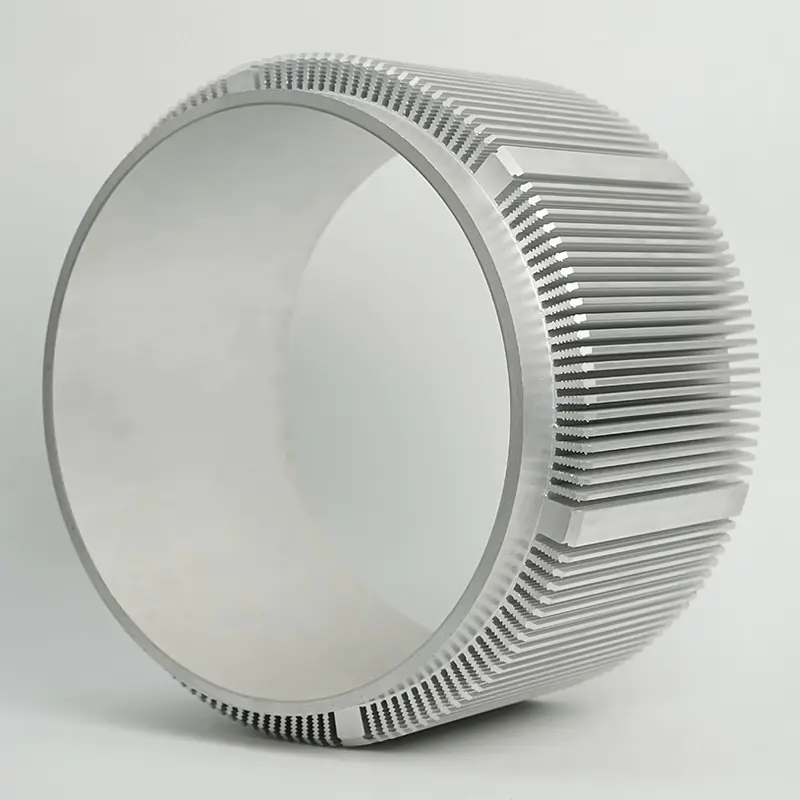
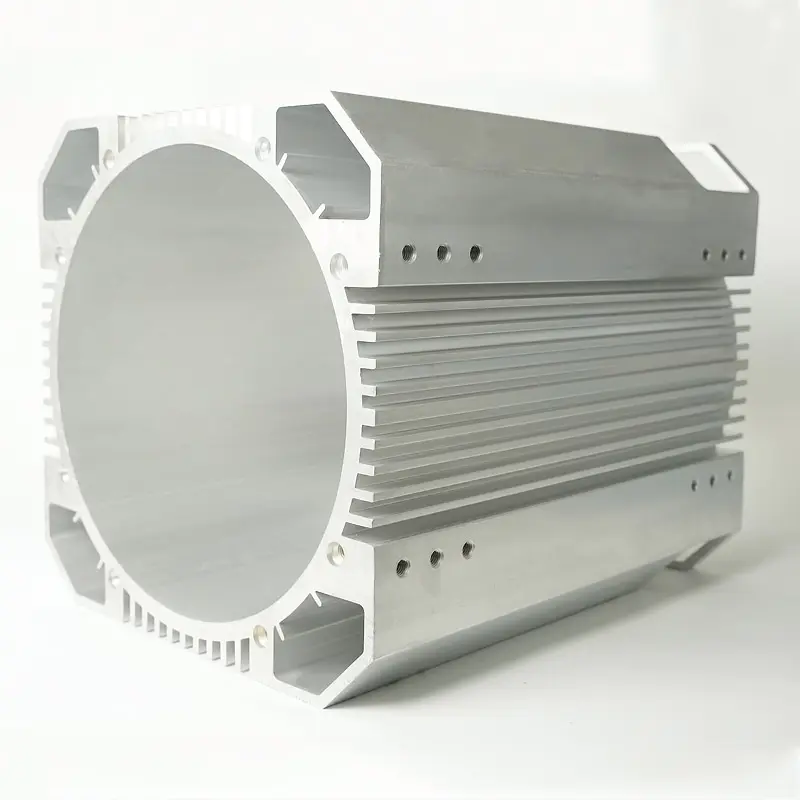
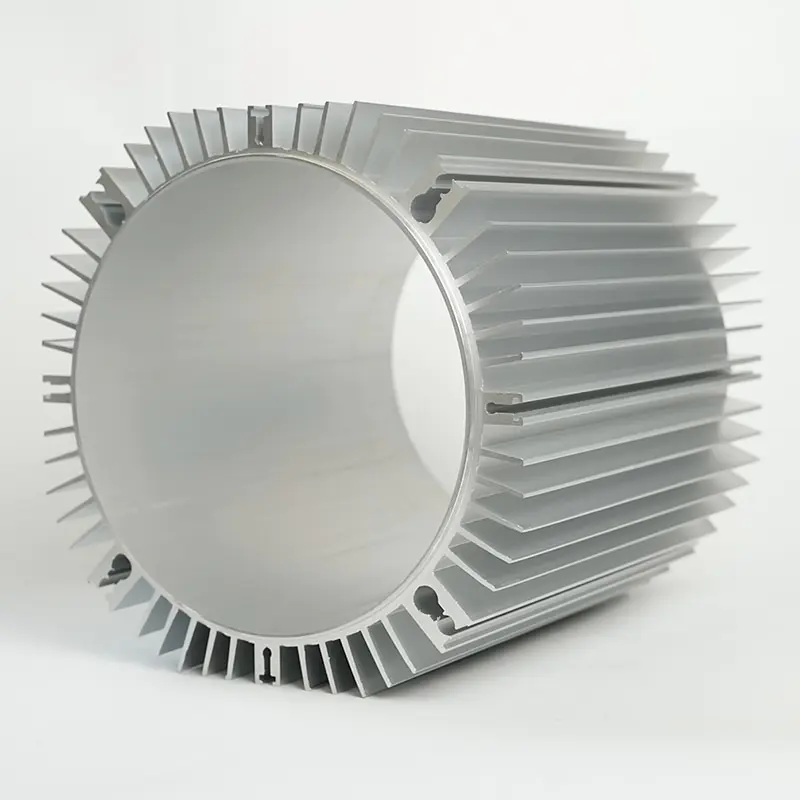
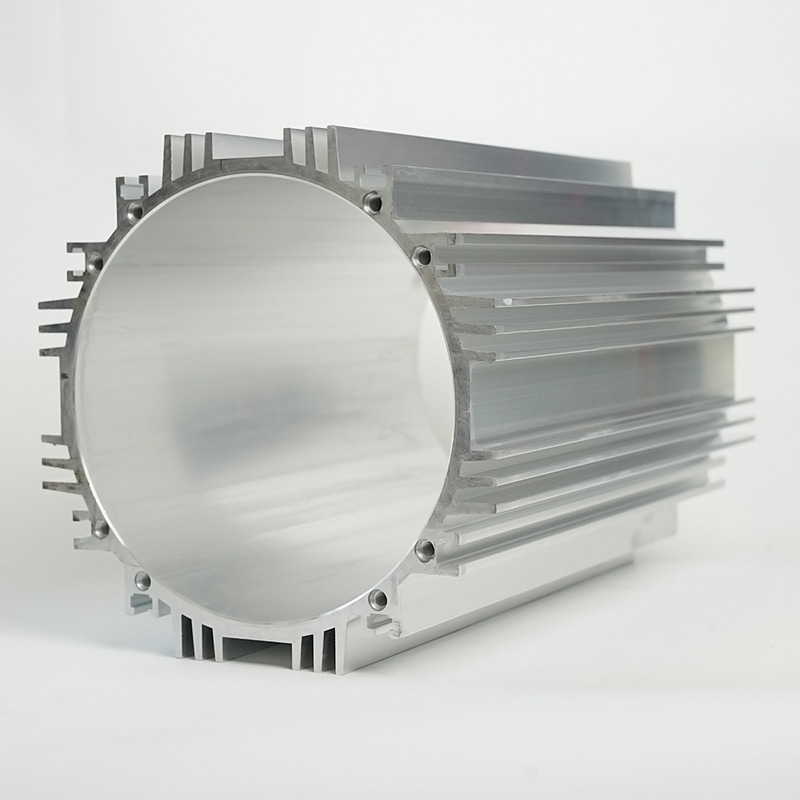
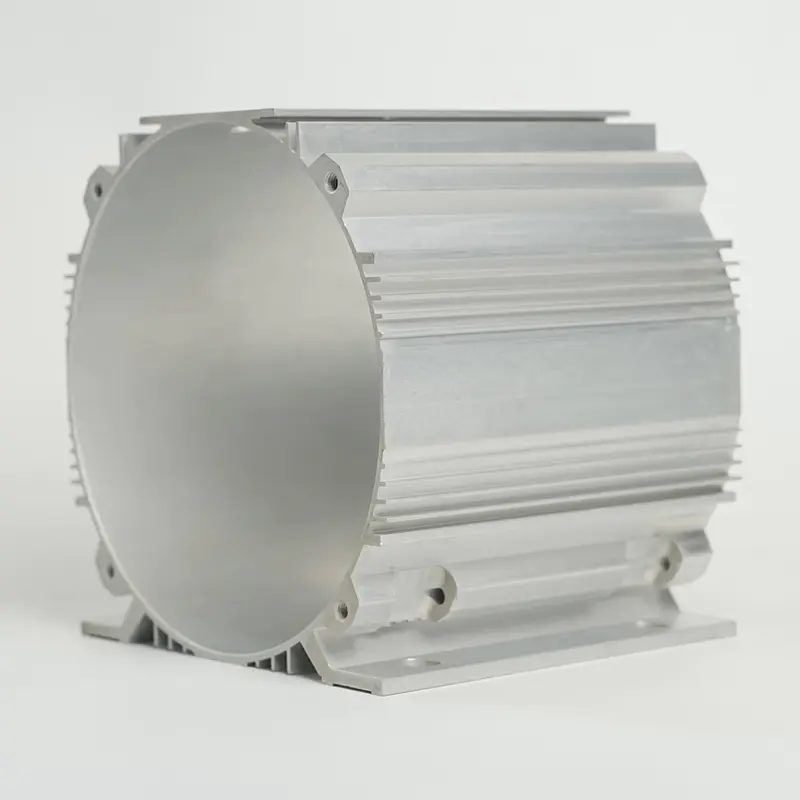
An aluminum motor housing with integrated heat sink fins is the most effective thermal management solution for electric motors operating in demanding environments. With thermal conductivity ranging from 150 to 205 W/m-K and a density of only 2.7 g/cm³, aluminum motor housings dissipate heat up to 3.5 times faster than cast iron alternatives while reducing overall weight by approximately 60%. For electric vehicle powertrains, industrial servo motors, and high-performance electric machinery, properly designed aluminum heat sink housings maintain motor operating temperatures below 80°C under continuous full load, compared to 110°C for unhoused or poorly cooled motors. This temperature reduction directly extends motor insulation life by 50% and maintains efficiency levels above 92% across all load conditions.
Material Properties and Alloy Selection
Pure aluminum conducts heat at 205-237 W/m-K, placing it among the top-performing thermal conductors available for commercial applications. However, motor housing applications require alloys that balance thermal performance with mechanical strength, castability, and corrosion resistance. The Al-Si-Cu alloy family dominates motor housing production, with specific grades selected based on application requirements.
Primary Aluminum Alloys for Motor Housings
Alloy A356 delivers thermal conductivity of approximately 150 W/m-K with elongation up to 7%, providing excellent impact resistance for automotive applications. ADC12 offers thermal conductivity of 96-105 W/m-K with tensile strength reaching 280-310 MPa, making it suitable for general-purpose structural motor housings where mechanical loads exceed thermal demands. ADC5, an Al-Mg system alloy, achieves 150-180 W/m-K thermal conductivity with superior corrosion resistance and weldability, ideal for marine and harsh-environment motor applications. For CNC-machined housings requiring tight tolerances, 6061-T6 provides 160-170 W/m-K thermal conductivity with excellent machinability and corrosion resistance.
| Alloy | Thermal Conductivity | Tensile Strength | Primary Application |
|---|---|---|---|
| A356 | 150 W/m-K | 220-260 MPa | EV motor housings, casting |
| ADC12 | 96-105 W/m-K | 280-310 MPa | General structural housings |
| ADC5 | 150-180 W/m-K | 180-240 MPa | Marine, corrosion-critical |
| 6061-T6 | 160-170 W/m-K | 290 MPa | CNC machined housings |
| 6063 | 200-210 W/m-K | 215 MPa | Extruded heat sink fins |
Heat Sink Design and Thermal Performance
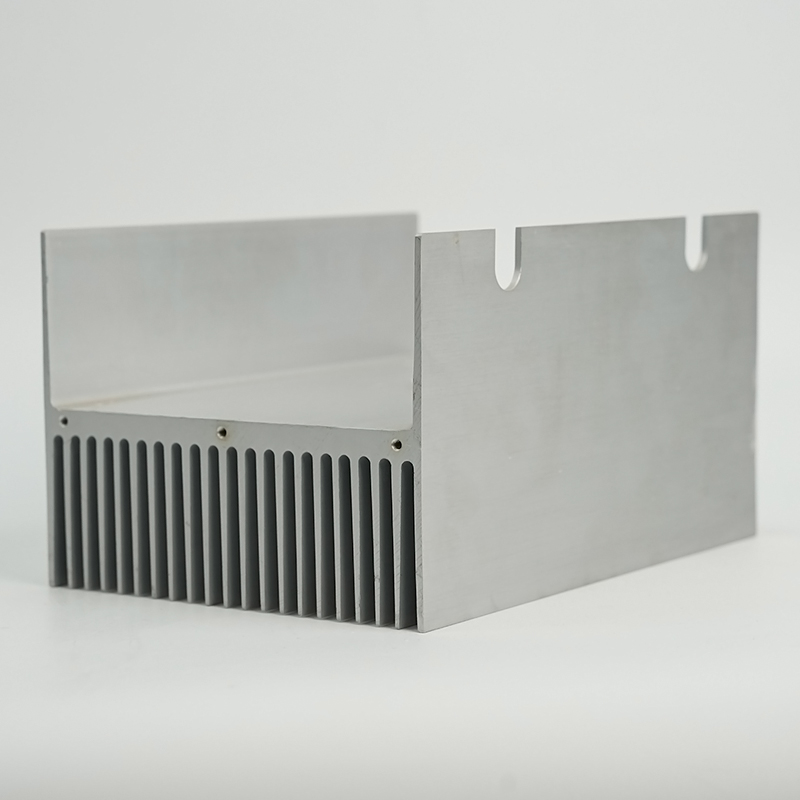
The heat sink integrated into aluminum motor housings operates through three heat transfer mechanisms: conduction from the motor core to the housing wall, convection from fin surfaces to ambient air, and radiation at elevated temperatures. Natural convection designs with fin arrays achieve heat transfer coefficients of approximately 10 W/m²-K, while forced convection with integrated fans or external airflow significantly enhances this performance.
Fin Geometry Optimization
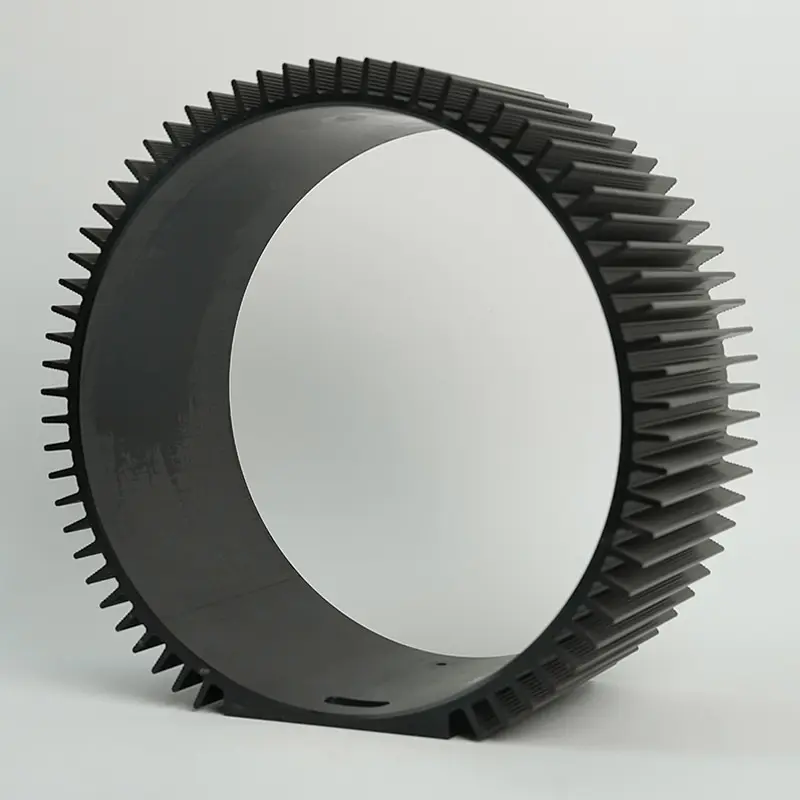
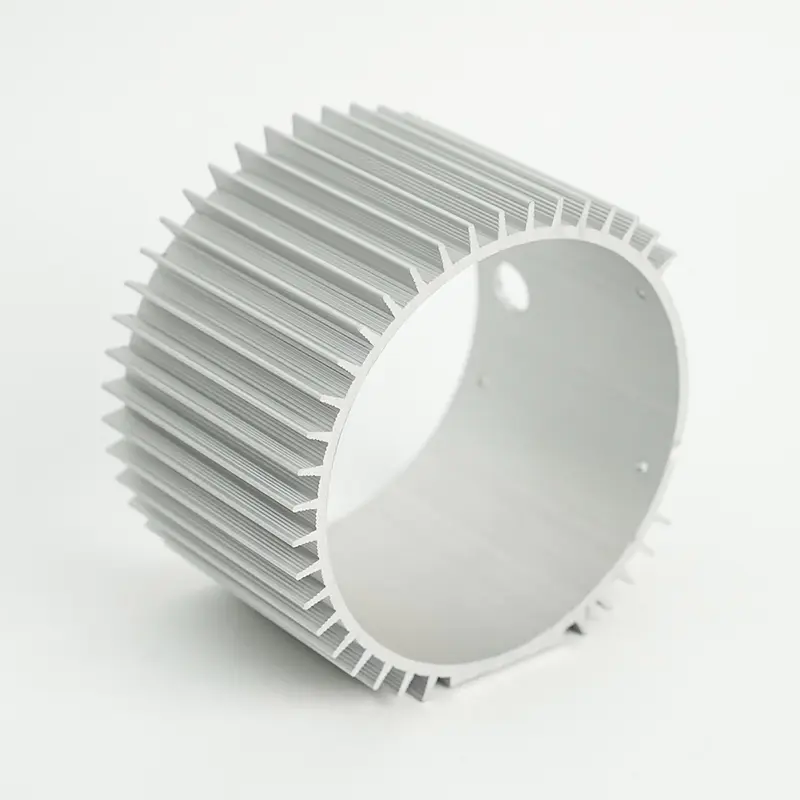
Research demonstrates that optimal fin spacing maximizes heat dissipation for a given base plate dimension and operating environment. Fin heights typically range from 20 mm to 35 mm, with base plate thicknesses of 2 mm to 6 mm depending on thermal load intensity. Staggered fin arrangements enhance airflow and cooling efficiency by up to 25% compared to straight parallel configurations. The fin thickness must balance thermal conduction path efficiency against weight minimization, with optimal values determined through thermal resistance modeling.
Surface Treatment for Enhanced Emissivity
Anodized aluminum surfaces exhibit higher emissivity than untreated aluminum, supporting improved heat dissipation in natural convection-dominated applications. Black anodizing increases surface emissivity to approximately 0.8 compared to 0.1 for polished aluminum, significantly enhancing radiative heat transfer at elevated operating temperatures. This treatment is particularly valuable for motors operating in enclosed environments with limited airflow where radiation becomes a primary heat transfer mode.
Manufacturing Methods and Precision
Aluminum motor housing heat sinks are manufactured through die casting, sand casting, CNC machining, or extrusion processes, with method selection driven by production volume, geometric complexity, and tolerance requirements. Die casting dominates high-volume production, achieving tolerances of plus or minus 0.05 mm while enabling integration of complex cooling fins, mounting brackets, and liquid cooling channels in a single component.
Die Casting for Complex Geometries
High-pressure die casting using cold chamber machines produces motor housings with intricate internal cooling passages and external fin arrays. Pouring temperatures range from 650°C to 830°C depending on alloy composition, with die temperatures maintained at 150°C using mold temperature controllers. This process enables the integration of features impossible to achieve through machining alone, such as thin-wall cooling jackets and complex internal rib structures that enhance structural rigidity while maximizing heat transfer surface area.
CNC Machining for Precision Applications
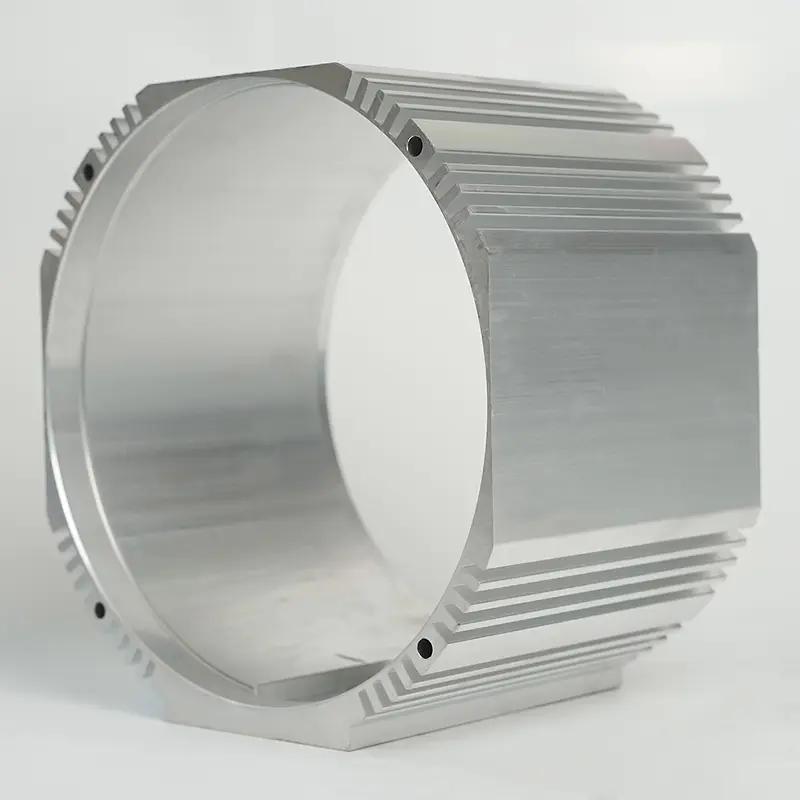
For low to medium volume production or applications requiring extreme precision, CNC machining of 6061-T6 billet stock delivers housing tolerances within 0.01 mm. Machined housings accommodate tight bearing fits, precise mounting interfaces, and custom thermal interface surfaces. While machining costs exceed die casting for high volumes, the absence of tooling investment makes CNC production economical for prototype development and specialized motor configurations.
Application-Specific Performance Benefits
The integration of heat sink functionality into aluminum motor housings delivers measurable performance improvements across all major motor application categories. Temperature management directly impacts motor efficiency, insulation life, and power density capabilities.
| Load Condition | Without Heat Sink Housing | With Heat Sink Housing |
|---|---|---|
| Light Load Efficiency | 91% | 94% |
| Medium Load Efficiency | 89% | 93% |
| Full Load Efficiency | 88% | 92% |
| Temperature Rise after 2 Hours | +40°C | +15°C |
| Steady-State Temperature | 110°C | 80°C |
| Cooling Time after Shutdown | 45 minutes | 20 minutes |
Electric Vehicle Powertrains
In electric vehicle applications, aluminum motor housing heat sinks reduce powertrain weight by 60% compared to cast iron while enabling integration of liquid cooling channels for high-performance traction motors. The housing serves as both a structural member and thermal management component, supporting the motor stator while dissipating heat from windings and power electronics. Corrosion resistance ensures longevity in environments exposed to road salt, moisture, and temperature extremes ranging from -40°C to 150°C.
Industrial Servo Motors
Industrial automation systems utilize aluminum heat sink housings for servo motors operating in continuous duty cycles. The lightweight construction reduces robot arm inertia, enabling faster positioning and improved energy efficiency. Integrated cooling fins maintain precise motor temperature control, preventing encoder drift and maintaining positioning accuracy within plus or minus 0.01 degrees over extended operation periods.
Consumer Electronics and Appliances
Small aluminum motor housings with integrated heat sinks serve washing machines, air conditioners, power tools, and pump motors. The corrosion-resistant aluminum surface eliminates the need for additional protective coatings, while the excellent machinability enables precise balancing for low-vibration operation. Housing inner hole sizes range from 46 mm to 260 mm with ellipticity maintained within 10 seconds tolerance for precise rotor alignment.
Design Integration and Additional Functions
Modern aluminum motor housing heat sinks serve functions beyond thermal management, integrating electromagnetic interference shielding, vibration damping, and structural mounting into a single component. The conductive aluminum housing blocks EMI emissions from motor windings, protecting sensitive control electronics in adjacent enclosures. This shielding capability is critical for medical equipment, precision instrumentation, and communication systems where electromagnetic compatibility is mandatory.
Liquid Cooling Integration
High-performance motors operating above 10 kW power output require active liquid cooling integrated into the aluminum housing. Die-cast cooling jackets with internal water channels surround the stator, achieving heat transfer coefficients exceeding 500 W/m²-K compared to 10 W/m²-K for natural air convection. The aluminum housing serves as the primary heat exchanger, transferring thermal energy from the motor core to coolant circulating through precision-machined passages. This configuration maintains motor temperatures below 70°C even under peak load conditions, enabling continuous operation at maximum power output.
Thermal Interface Optimization
The interface between the motor stator and housing inner diameter represents a critical thermal resistance path. Precision machining achieves surface finishes that minimize air gaps, while thermal interface materials such as conductive pads or compounds fill microscopic surface irregularities. Even perfectly machined surfaces contact at only 1-5% of their apparent area, making thermal interface materials essential for achieving design heat transfer rates. Proper interface design can reduce thermal resistance by 40-60%, directly improving motor continuous power rating.
Selection Criteria and Specification Guidelines
Specifying an aluminum motor housing with heat sink functionality requires systematic evaluation of thermal load, environmental conditions, mechanical requirements, and manufacturing constraints. The following framework ensures optimal selection for specific motor applications.
Specification Checklist
- Calculate continuous and peak thermal loads from motor losses and operating duty cycle
- Determine maximum allowable motor temperature based on insulation class and bearing specifications
- Select alloy based on thermal conductivity requirements versus mechanical strength needs
- Design fin geometry using thermal resistance modeling with ambient temperature and airflow conditions
- Specify manufacturing method: die casting for high volume, CNC machining for precision prototypes
- Integrate mounting interfaces, sealing surfaces, and electrical connection points into housing design
- Select surface treatment: anodizing for corrosion protection and emissivity enhancement, powder coating for insulation
Aluminum motor housing heat sinks represent a mature technology with proven reliability across automotive, industrial, and consumer applications. The combination of excellent thermal performance, lightweight construction, corrosion resistance, and manufacturing versatility makes aluminum the material of choice for motor thermal management. As electric motor power densities continue increasing, optimized aluminum housing designs with advanced fin geometries and integrated liquid cooling will remain essential for maintaining reliable operation and maximizing motor lifespan.