
 English
 Español
Content
Why Aluminum Is Used for Motor Housings
Aluminum's combination of high thermal conductivity, low density, and natural corrosion resistance makes it the dominant material choice for electric motor housings across industrial, automotive, and consumer applications. At roughly 205-230 W/m·K, aluminum conducts heat about four times faster than cast iron, which matters directly for motor performance since excess heat is one of the primary factors limiting a motor's continuous power output and service life.
Beyond thermal performance, aluminum weighs about one-third as much as cast iron for a given volume, which reduces overall motor weight — a meaningful advantage in electric vehicles, aerospace actuators, drones, and any application where weight directly affects efficiency or payload capacity. Aluminum also forms a natural oxide layer that resists corrosion without additional treatment, and it machines and casts more easily than iron, generally lowering manufacturing cost and lead time for complex housing geometries.
Aluminum vs Cast Iron Motor Housing
| Factor | Aluminum Housing | Cast Iron Housing |
|---|---|---|
| Thermal conductivity | ~205-230 W/m·K | ~50-55 W/m·K |
| Weight | Significantly lighter | About 3x heavier than aluminum |
| Corrosion resistance | Naturally resistant via oxide layer | Prone to rust without coating |
| Mechanical strength/rigidity | Good, sufficient for most motor classes | Higher, favored for very large or high-vibration motors |
| Typical application | EV motors, servo motors, drones, general industrial motors | Very large industrial motors, high-vibration heavy machinery |
Aluminum and cast iron motor housings compared across common selection criteria.
Cast iron still holds an edge in raw mechanical rigidity and vibration damping, which is why it remains the standard for some very large industrial motors where housing mass helps absorb operational vibration. For the majority of modern motor classes — especially where weight, thermal management, or manufacturing cost are priorities — aluminum has become the default material.
Motor Housing Heat Dissipation
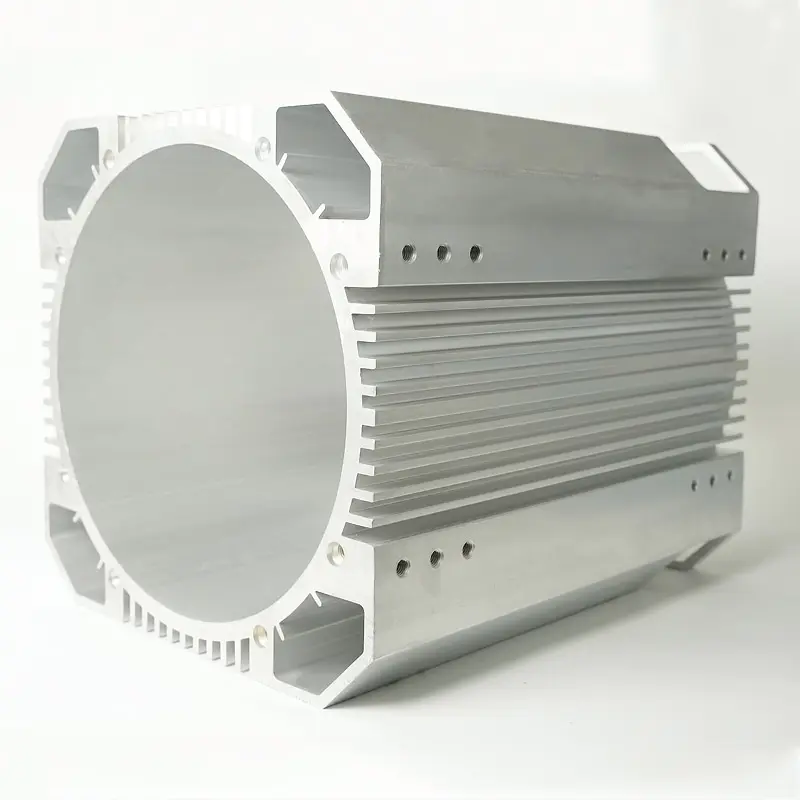
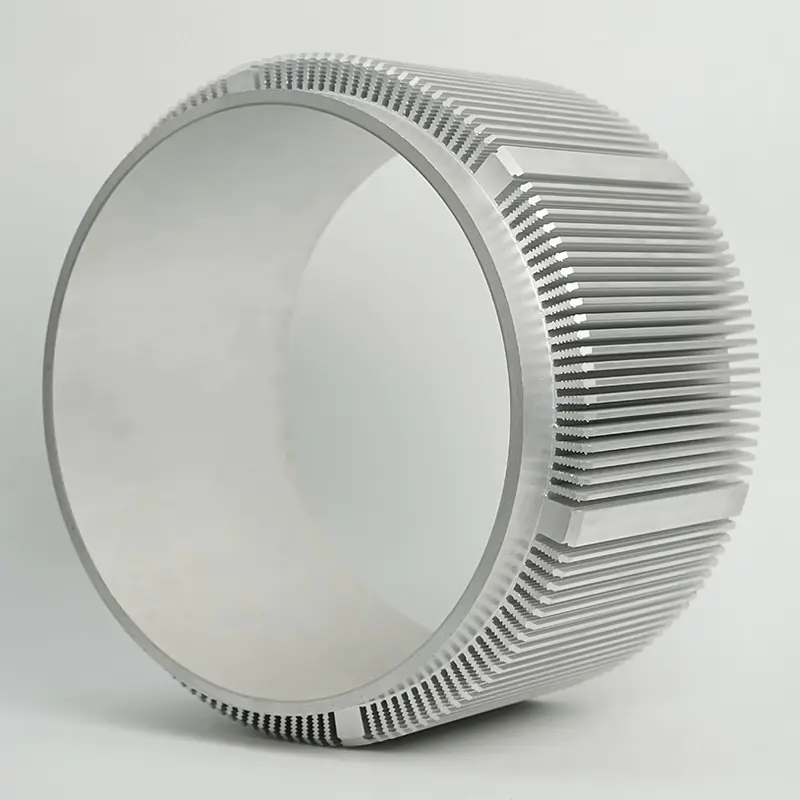
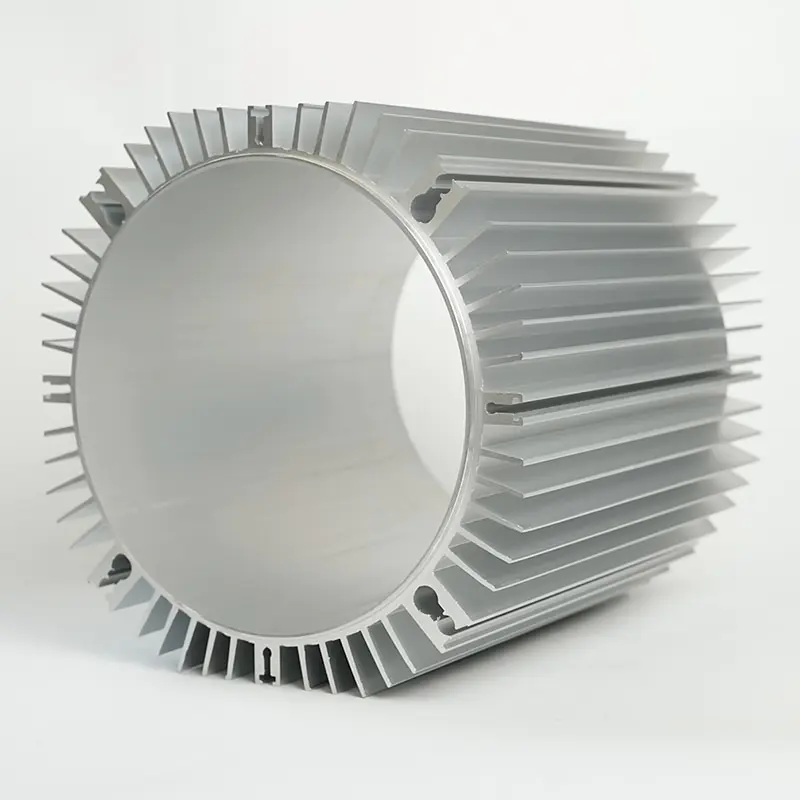
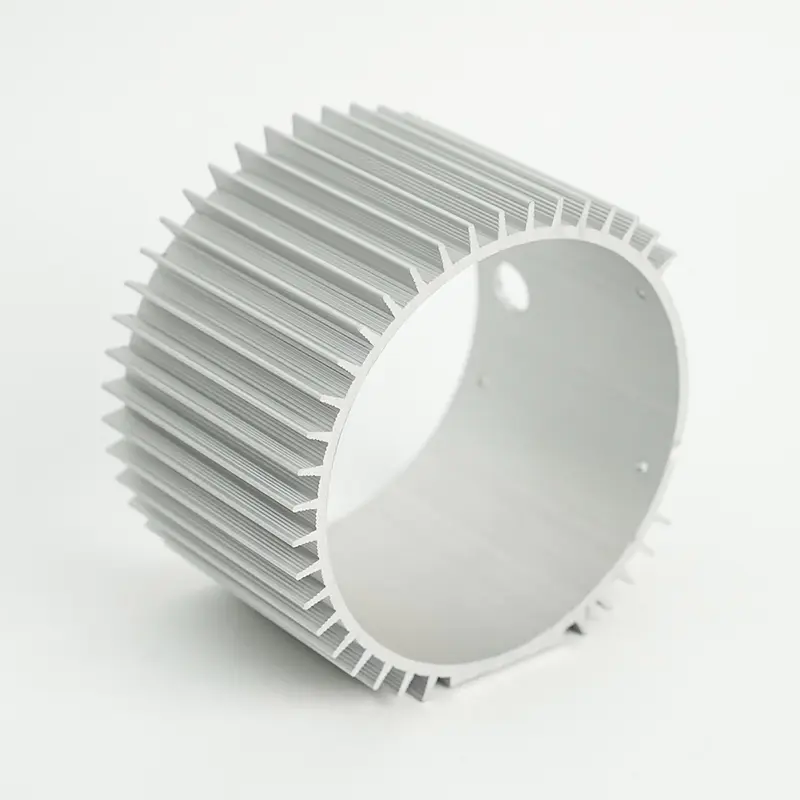
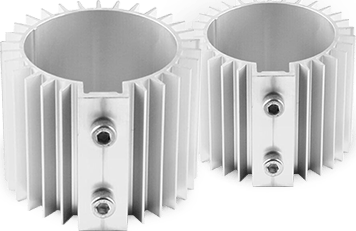
A motor housing's heat dissipation performance depends on more than just base material conductivity — geometry plays an equally important role. Housings are commonly designed with external cooling fins that dramatically increase surface area, letting more heat transfer to surrounding air within the same overall housing footprint. Fin spacing, height, and orientation are tuned to the motor's airflow conditions, whether that's natural convection, a shaft-mounted fan, or forced-air cooling from an external blower.
Wall thickness is another key variable: thicker housing walls conduct more total heat away from internal windings but add weight, so designs typically balance wall thickness against the motor's expected thermal load and the application's weight sensitivity. Some high-performance housings add internal cooling channels for liquid cooling, which further increases heat removal capacity beyond what passive fin cooling alone can achieve, particularly relevant in EV traction motors operating at continuous high load.
Aluminum Motor Housing Manufacturing Process
Aluminum motor housings are produced through one of three primary methods, each suited to different volumes and geometries:
- Die casting — molten aluminum is injected under high pressure into a steel mold, producing complex shapes with cooling fins and mounting features in a single step; well suited to high-volume production.
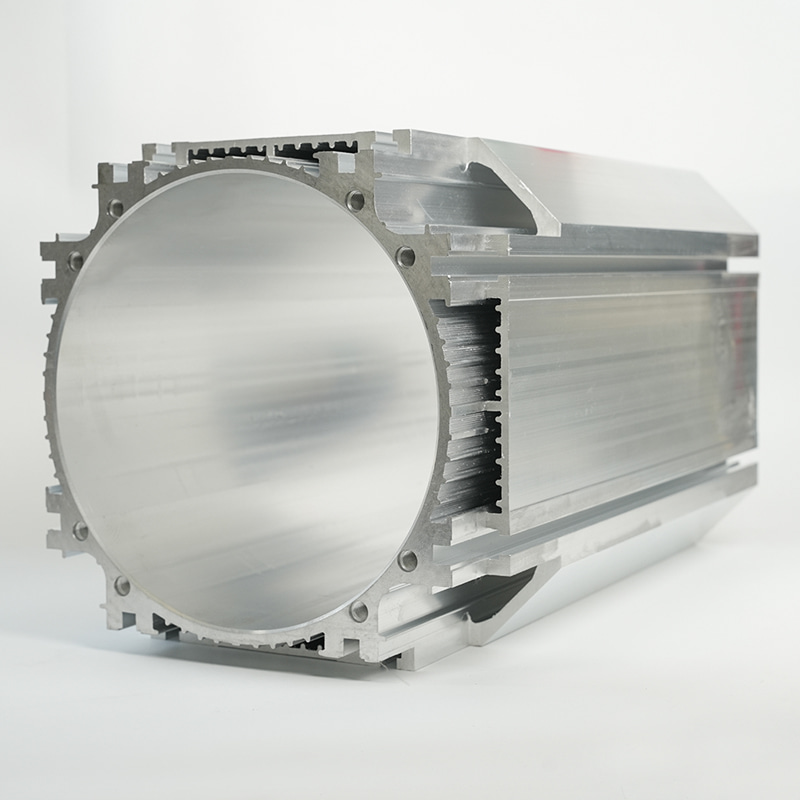
- Extrusion — aluminum billet is forced through a shaped die to produce a continuous profile with a consistent cross-section, then cut to length; efficient for housings with a uniform cylindrical or finned profile along their length.
- CNC machining — a solid aluminum blank or rough casting is precision-machined to final dimensions, used for tight tolerances, prototypes, or lower-volume production runs.
Many production housings combine methods — for example, an extruded or die-cast base shape followed by CNC machining of critical mounting faces, bearing bores, and bolt patterns that require tighter tolerances than casting or extrusion alone can hold.
Extruded Aluminum Motor Housing
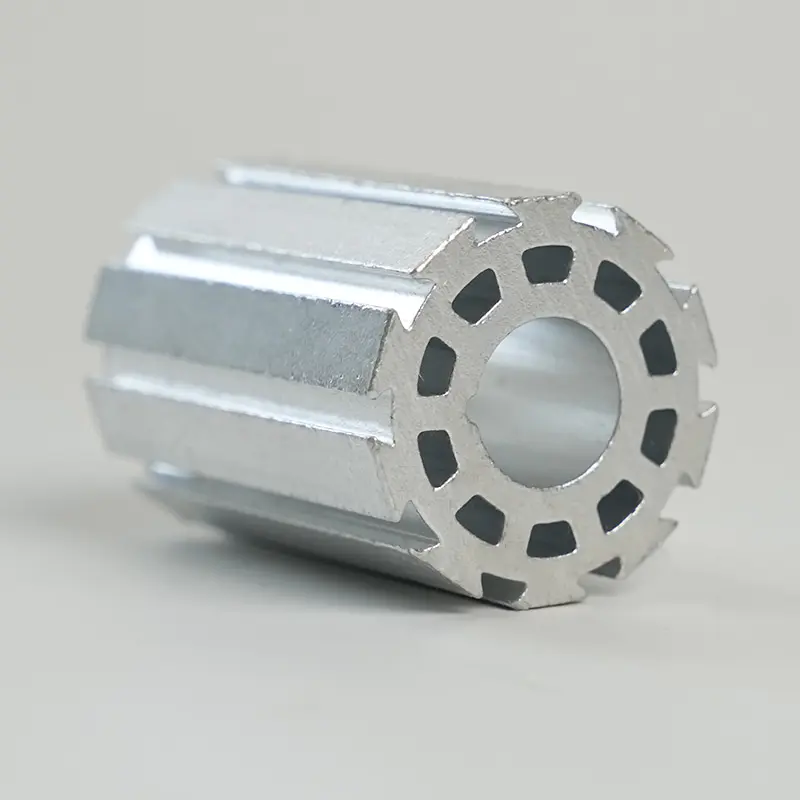
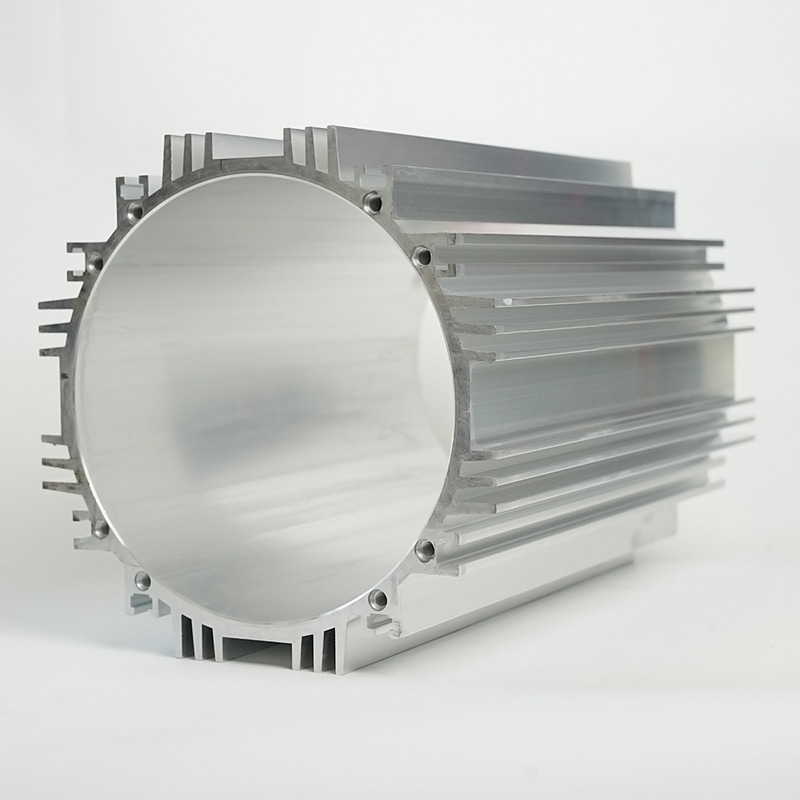
Extruded aluminum housings are formed by pushing heated aluminum billet through a die that shapes it into the target cross-section — commonly a finned cylinder for cylindrical motor bodies. Because the extrusion process produces a continuous profile, manufacturers can cut housings to any length from the same die, making it a cost-efficient option for motor families that share a common housing diameter but come in multiple lengths for different power ratings.
Extrusion is generally more economical than die casting for simpler, constant-cross-section geometries, since it avoids the tooling cost of a full casting mold. It's less suited to housings requiring complex end caps, integrated mounting brackets, or varying wall features along the length, which typically require casting or additional machining to add those features after extrusion.
CNC Machined Motor Housing
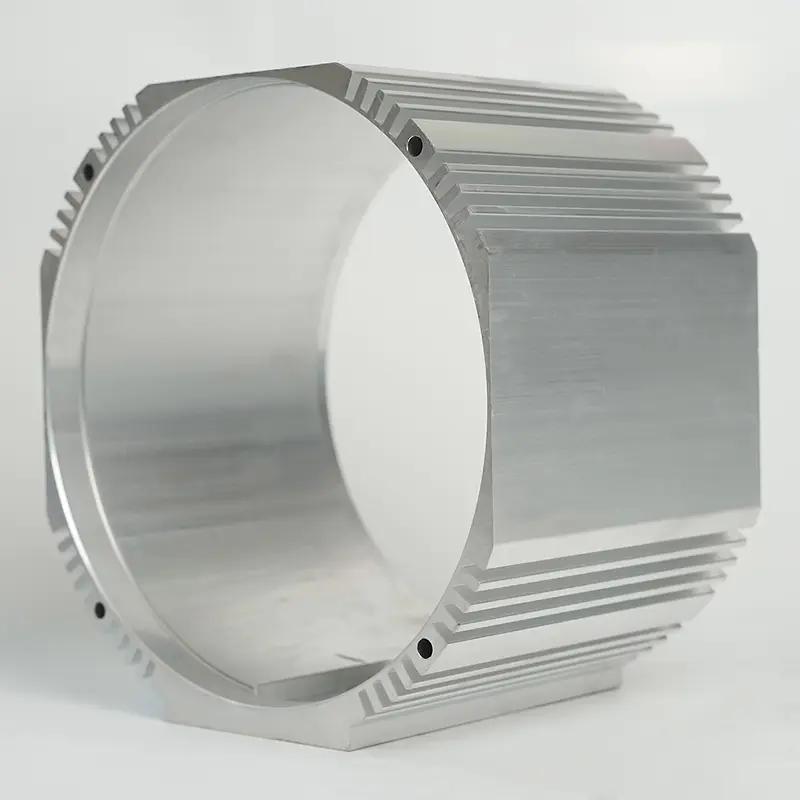
CNC machining is typically used either for the final precision features on a cast or extruded housing, or as the complete manufacturing method for low-volume, prototype, or high-tolerance applications. Because CNC machining removes material from a solid or roughly-shaped blank according to a digital design file, it can hold tighter dimensional tolerances than casting or extrusion alone, which matters most for bearing seats, shaft alignment bores, and mating surfaces where precision affects motor performance and longevity.
The trade-off is cost and speed at scale: CNC machining a housing entirely from solid stock is generally slower and more expensive per unit than die casting once production volumes rise, which is why full CNC production is more common for specialized, low-volume, or prototype motor housings than for mass-produced consumer or automotive motors.
Anodized Aluminum Motor Housing
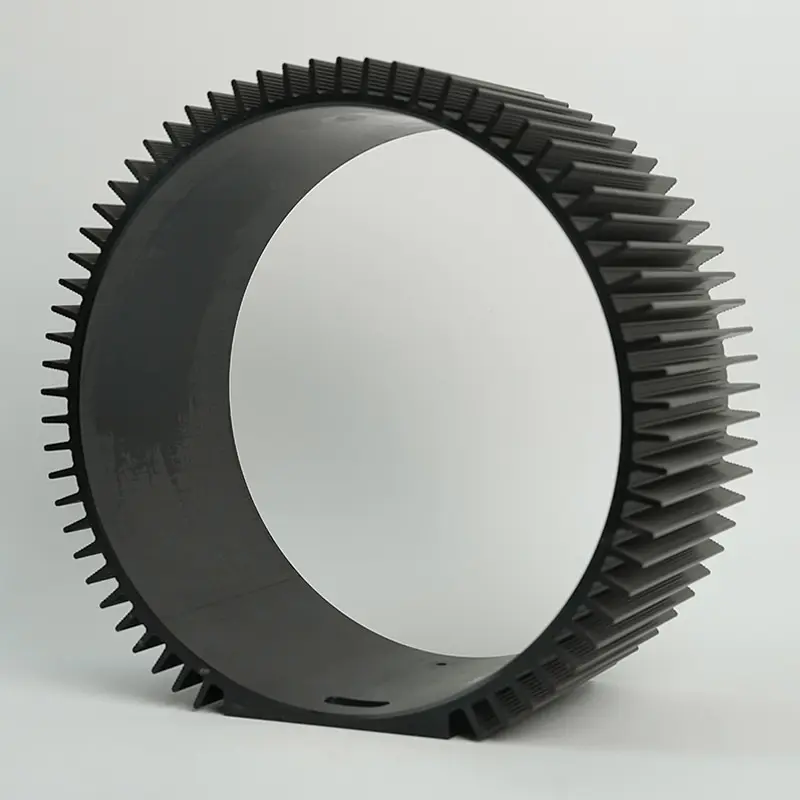
Anodizing is an electrochemical process that thickens aluminum's natural oxide layer, producing a harder, more wear- and corrosion-resistant surface than untreated aluminum. For motor housings, anodizing is commonly applied for two reasons: improved durability in harsh operating environments (moisture, chemical exposure, outdoor use), and electrical insulation, since the anodized layer is non-conductive and can help isolate the housing from internal electrical components.
Anodized finishes also accept dye well, allowing housings to be color-coded for product lines or brand identification, and the treatment doesn't meaningfully change the housing's thermal conductivity, so anodized housings retain aluminum's core heat-dissipation advantage while gaining a more durable, often more attractive surface finish.
Motor Housing Design Considerations
- Thermal management — fin geometry, wall thickness, and any integrated cooling channels need to match the motor's expected continuous and peak thermal load.
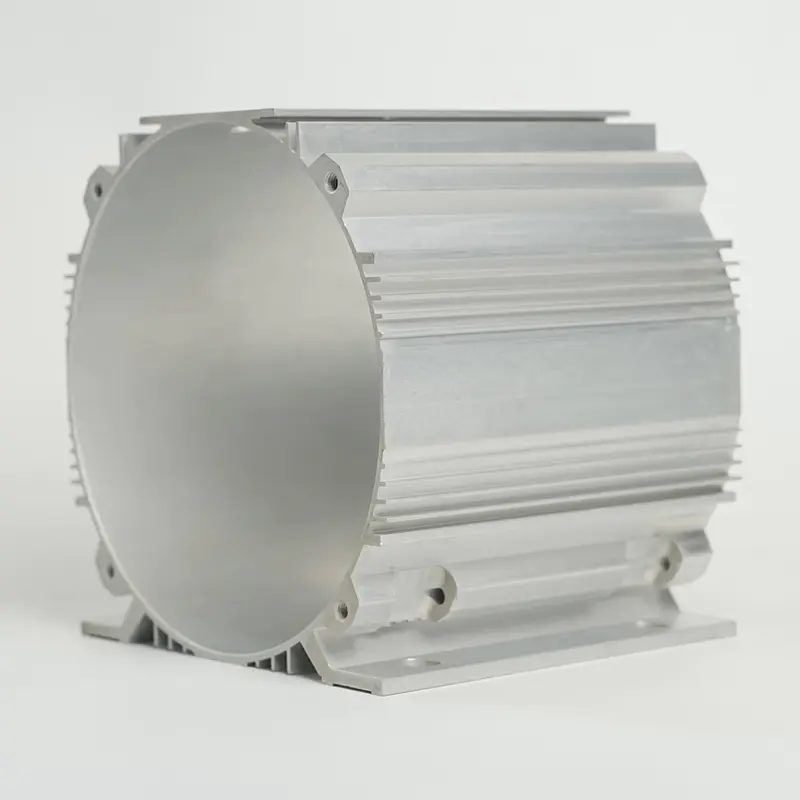
- Mounting and integration — bolt patterns, flange dimensions, and shaft alignment features must match the application's mechanical interface requirements precisely.
- Environmental protection (IP rating) — housings for outdoor, washdown, or dusty environments require sealing features and gasket provisions to meet the target ingress protection rating.
- Weight targets — particularly critical in EV, aerospace, and drone applications, where housing wall thickness and material choice are optimized to remove weight without compromising structural integrity.
- Manufacturing volume — expected production quantity strongly influences whether die casting, extrusion, or CNC machining is the most cost-effective production method for a given design.