
 English
 Español
Content
- 1 The Immediate Answer: An Aluminum Alloy Frame Is a High-Strength, Lightweight Structural Skeleton
- 2 Why the Alloy Matters More Than the "Aluminum" Label
- 3 Aluminum vs. Steel Frames: Where Weight Savings Justify the Cost
- 4 Surface Protection: Why an Aluminum Frame Can Last a Century
- 5 Practical Design Constraints When Specifying an Aluminum Alloy Frame
The Immediate Answer: An Aluminum Alloy Frame Is a High-Strength, Lightweight Structural Skeleton
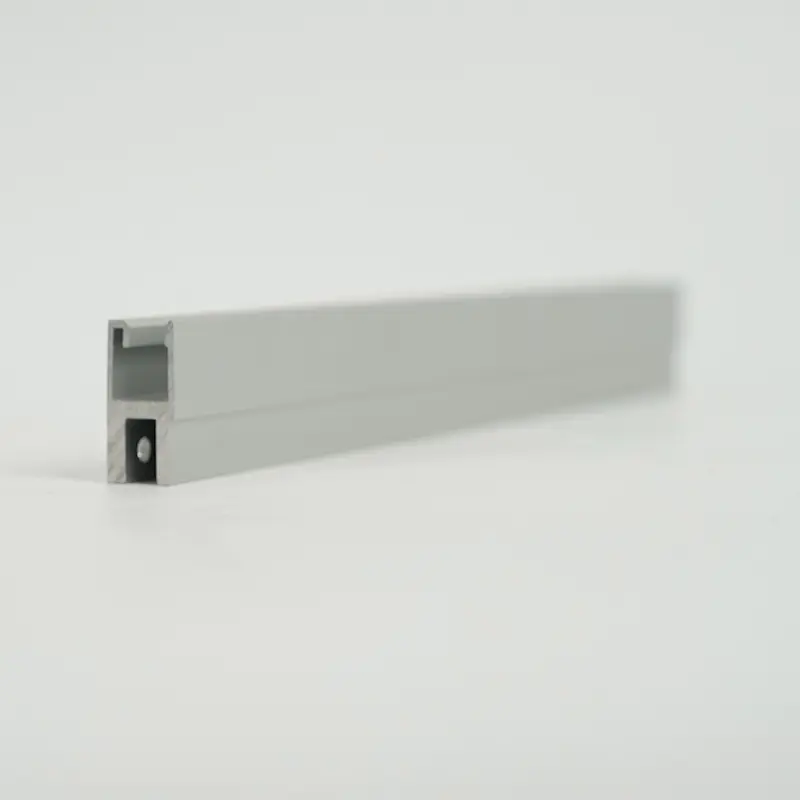
An aluminum alloy frame is a structural assembly made from aluminum combined with elements such as magnesium, silicon, copper, or zinc to achieve specific mechanical properties far beyond those of pure aluminum. The core value proposition is its strength-to-weight ratio: a typical 6061-T6 aluminum alloy, the most common grade for structural frames, offers a yield strength of 240–276 MPa while weighing approximately one-third as much as an equivalent steel section. This fundamental advantage makes it the default choice for applications ranging from aerospace fuselage ribs and automotive chassis subframes to high-end bicycle frames, solar panel mounting systems, and architectural curtain walls. When someone searches for "aluminum alloy frame," the intent is almost always a comparison — whether to steel, carbon fiber, or another alloy — and the answer starts with understanding that aluminum frames are selected when weight reduction, corrosion resistance, or thermal conductivity are the primary design drivers.
Why the Alloy Matters More Than the "Aluminum" Label
Aluminum itself is soft and ductile with a yield strength of only 7–11 MPa in its pure state. The addition of alloying elements and subsequent heat treatment is what transforms it into a structural material. The table below breaks down the four alloy families most frequently encountered in frame applications, each designed for a different operational environment.
| Alloy Series | Key Alloying Element | Tensile Strength (Typical) | Frame Application |
|---|---|---|---|
| 6000 series (e.g., 6061, 6063) | Magnesium & Silicon | 240–310 MPa | Bicycle frames, architectural extrusions, solar racking, automotive subframes |
| 7000 series (e.g., 7075, 7005) | Zinc | 510–572 MPa | High-performance bicycle frames, aircraft wing spars, military structures |
| 5000 series (e.g., 5083, 5052) | Magnesium | 220–310 MPa | Marine frames, chemical tank structures, pressure vessels |
| 2000 series (e.g., 2024) | Copper | 400–470 MPa | Aerospace fuselage frames (where fatigue resistance is critical) |
The 6000 series dominates general industrial and consumer applications because it offers an excellent balance of extrudability, weldability, and cost — 6063-T5 extrusions, for example, are the workhorse of solar panel frame profiles, providing sufficient load-bearing capacity while maintaining a corrosion-resistant surface that typically exceeds 30 years of service life in non-coastal environments without protective coating.
Aluminum vs. Steel Frames: Where Weight Savings Justify the Cost
The decision between an aluminum alloy frame and a steel frame is a recurring engineering crossroads. The data point that tips most decisions: aluminum has a density of 2.7 g/cm³ versus steel's 7.85 g/cm³. This means that for the same stiffness, an aluminum frame must be thicker-walled, but even after accounting for the increased section geometry, the finished aluminum assembly typically weighs 40–50% less than its steel counterpart. A 2022 study by the European Aluminium Association on automotive body-in-white structures found that replacing steel with a multi-material aluminum-intensive frame reduced the total structural weight by 38% while achieving equivalent torsional rigidity.
Corrosion behavior is the second decisive factor. Bare steel rusts when the relative humidity exceeds 60%, whereas aluminum spontaneously forms a passivating oxide layer (Al₂O₃) that is approximately 4 nanometers thick and self-repairs instantly if scratched, provided oxygen is present. Independent tests in coastal industrial environments show that uncoated 6061-T6 loses less than 0.025 mm of thickness per year in atmospheric exposure, compared to structural steel which can lose over 0.12 mm per year without paint or galvanizing. This inherent corrosion resistance eliminates or drastically reduces the lifecycle maintenance cost of aluminum frames in offshore platforms, bridges, and exterior architectural elements.
Surface Protection: Why an Aluminum Frame Can Last a Century
While the natural oxide layer provides baseline protection, most aluminum alloy frames intended for long-term service are either anodized or powder coated. Anodizing is an electrochemical process that thickens the oxide layer to a controlled depth of 5 to 25 microns, creating a hard, ceramic-like surface that is part of the metal itself — not a paint film that can delaminate. An architectural case study of an anodized aluminum curtain wall frame in a Scandinavian climate recorded no measurable loss of structural integrity after 45 years of service, with only a minor reduction in gloss due to surface micro-roughness.
Powder coating provides an alternative aesthetic and protective layer. Applied electrostatically and cured at high temperature, a properly pretreated powder coat layer can pass a 1,000-hour neutral salt spray test (ISO 9227) with no under-film corrosion. For frames installed in highly aggressive industrial zones — where airborne chlorides or sulfur compounds are present — a duplex system combining an anodic underlayer with a powder topcoat provides the maximum defense, effectively multiplying the frame's fatigue-safe service interval.
Practical Design Constraints When Specifying an Aluminum Alloy Frame
Despite the material's advantages, aluminum alloy frames present specific design limitations that must be managed. The most significant is the fatigue behavior: aluminum has no endurance limit, meaning that unlike steel, it will eventually fail under cyclic loading regardless of how low the stress amplitude is, if enough cycles accumulate. Design codes such as Eurocode 9 impose a fatigue strength for 6061-T6 of approximately 95 MPa at 2 million cycles for a welded detail, which is why welded joints in aluminum bicycle frames are reinforced with gussets or replaced entirely with hydroformed tube shapes that minimize local stress concentrations.
Thermal expansion must also be factored into the design. Aluminum's coefficient of linear thermal expansion is roughly 23 × 10⁻⁶ /°C, nearly twice that of steel. For a frame spanning 10 meters subjected to a 50°C temperature swing, the linear movement reaches 11.5 mm, a magnitude that requires expansion joints or slotted connections in long facades and solar array support structures. Failing to accommodate this movement can induce secondary stresses that accelerate fatigue crack initiation at bolted connections.
The knowledge of these constraints is what separates a frame that performs reliably for decades from one that develops unexpected cracks or excessive deflection within the first five years. By selecting the appropriate alloy series, specifying a verified protective finish, and accounting for thermal and fatigue loads at the design stage, an aluminum alloy frame becomes a structural solution with a service life measured in generations rather than years.