
 English
 Español
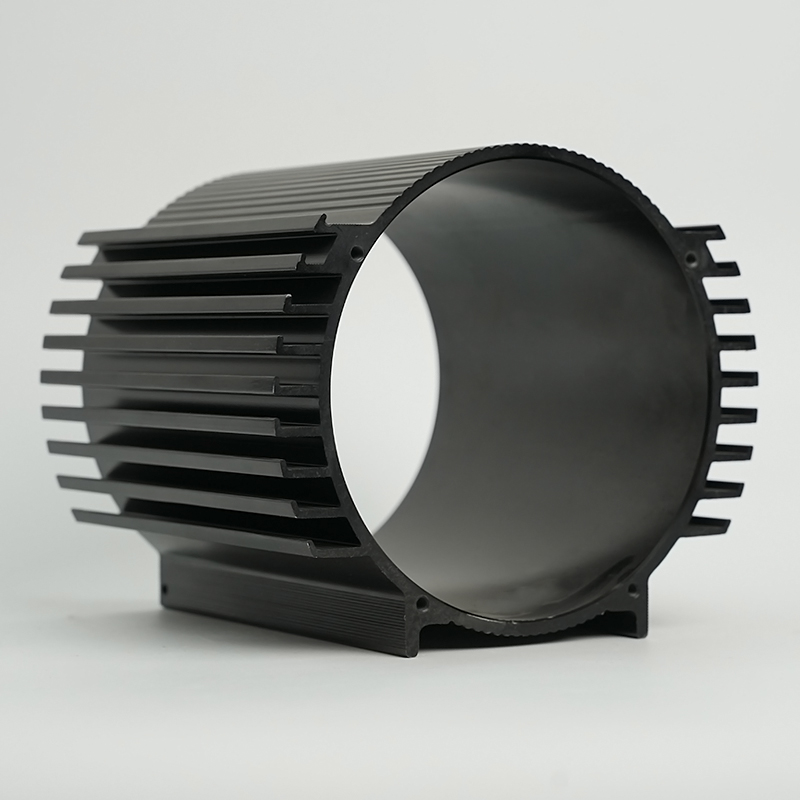
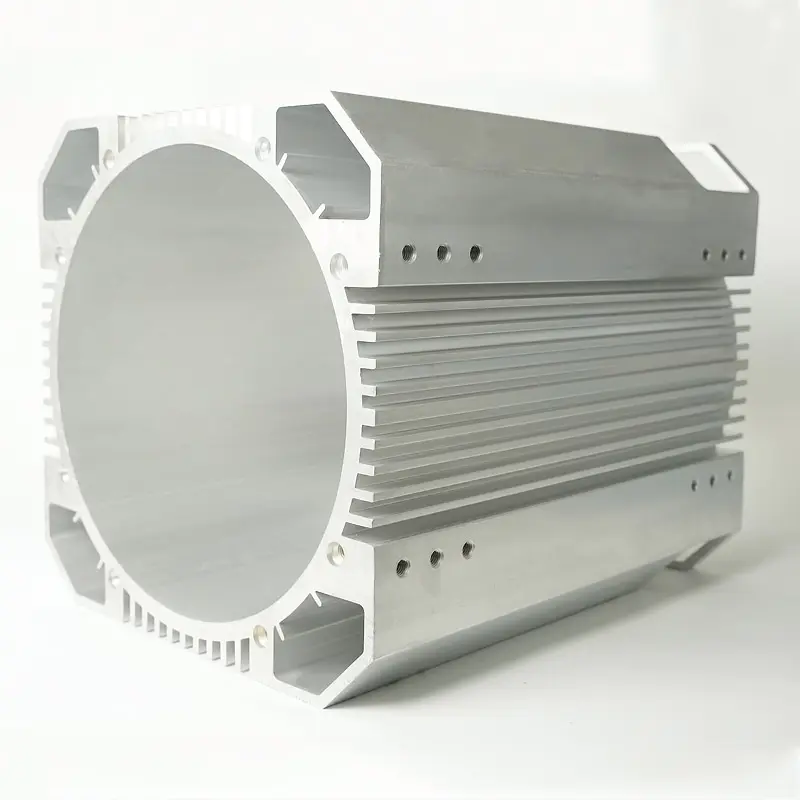
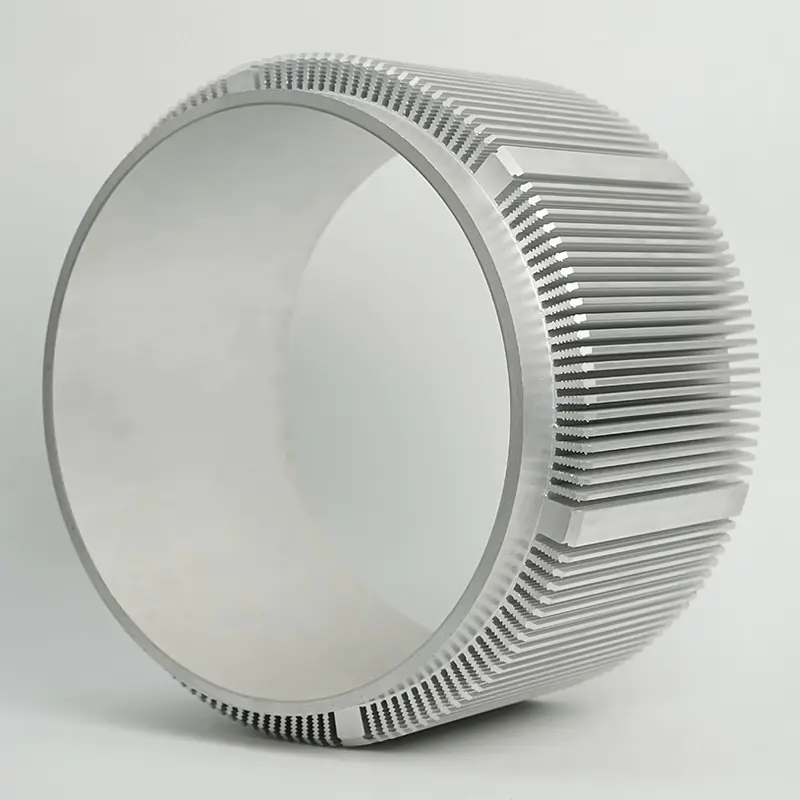
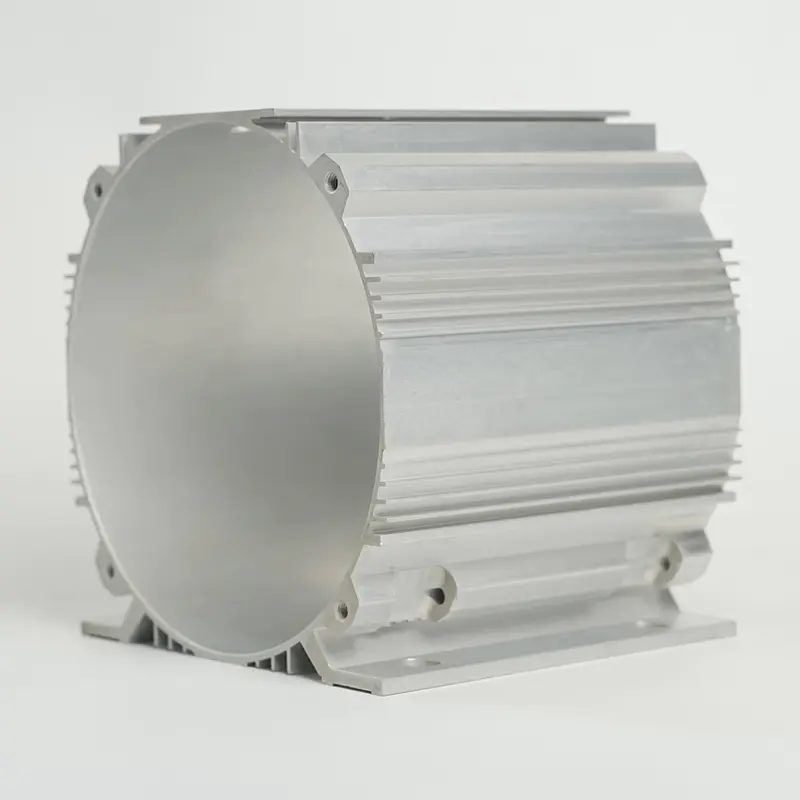
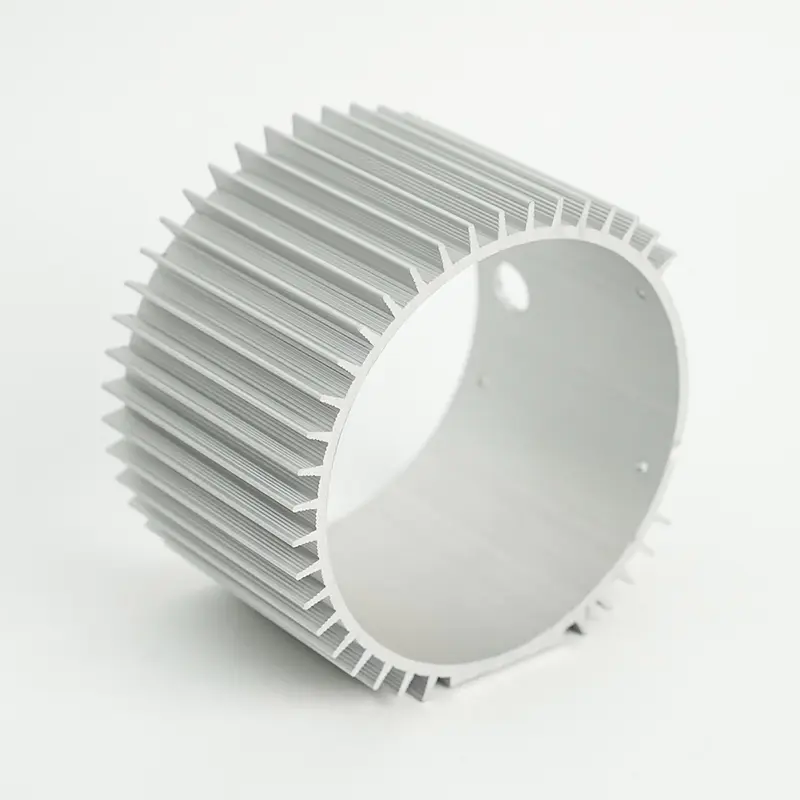
In the evolving landscape of high-efficiency motion control, the mechanical integrity and thermal management of motor enclosures have become paramount. The Aluminum Electric Motor Casing has emerged as the preferred choice for engineers seeking to balance structural rigidity with lightweight performance. Unlike traditional materials, high-grade aluminum alloys offer a unique combination of corrosion resistance and superior thermal dissipation. Understanding the benefits of aluminum motor housing requires a deep dive into metallurgical properties and precision manufacturing techniques like high-pressure die casting. This article examines the technical specifications and comparative advantages that make aluminum the gold standard for high-performance motor protection.
Content
- 1 1. Thermal Conductivity and Heat Dissipation Efficiency
- 2 2. Precision Manufacturing: Die-Casting and Dimensional Stability
- 3 3. Weight-to-Strength Ratio and Dynamic Performance
- 4 4. Environmental Impact and Sustainability
- 5 Frequently Asked Questions (FAQ)
- 5.1 1. What are the primary benefits of aluminum motor housing over cast iron?
- 5.2 2. Is the durability of the aluminum electric motor casing sufficient for heavy-duty industrial use?
- 5.3 3. How to clean the aluminum motor housing without damaging the surface?
- 5.4 4. Why is aluminum considered the best aluminum motor housings for EV applications?
- 5.5 5. Can I get custom die-cast aluminum electric motor parts for specific sizes?
- 6 Industry References
1. Thermal Conductivity and Heat Dissipation Efficiency
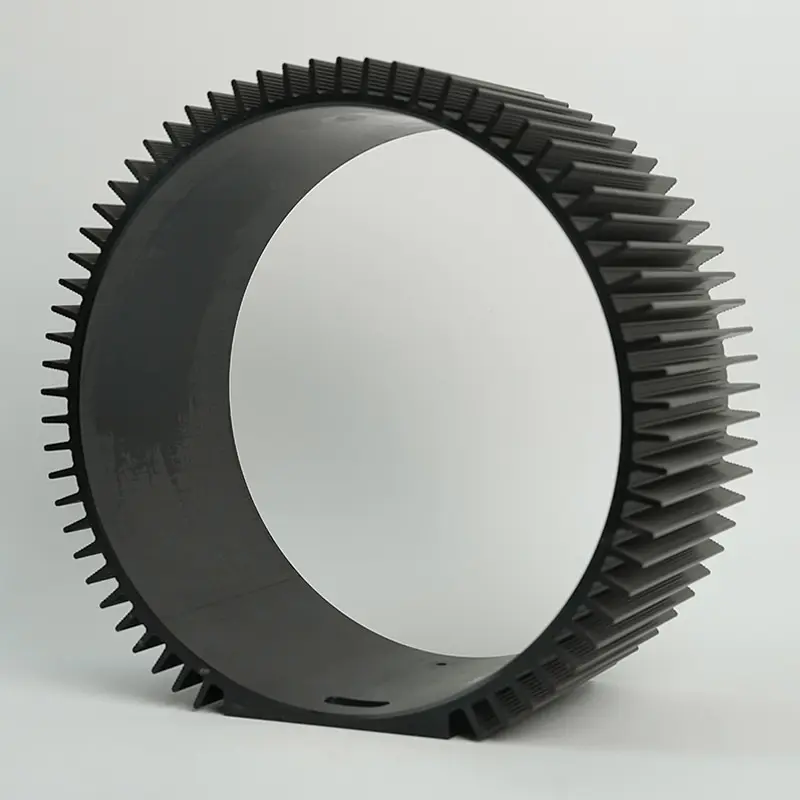
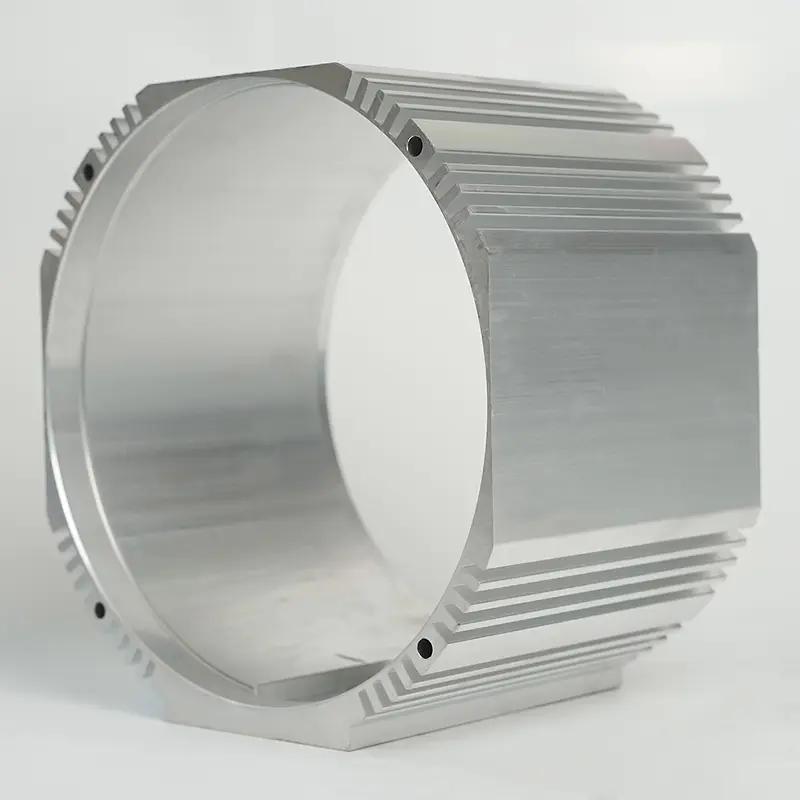
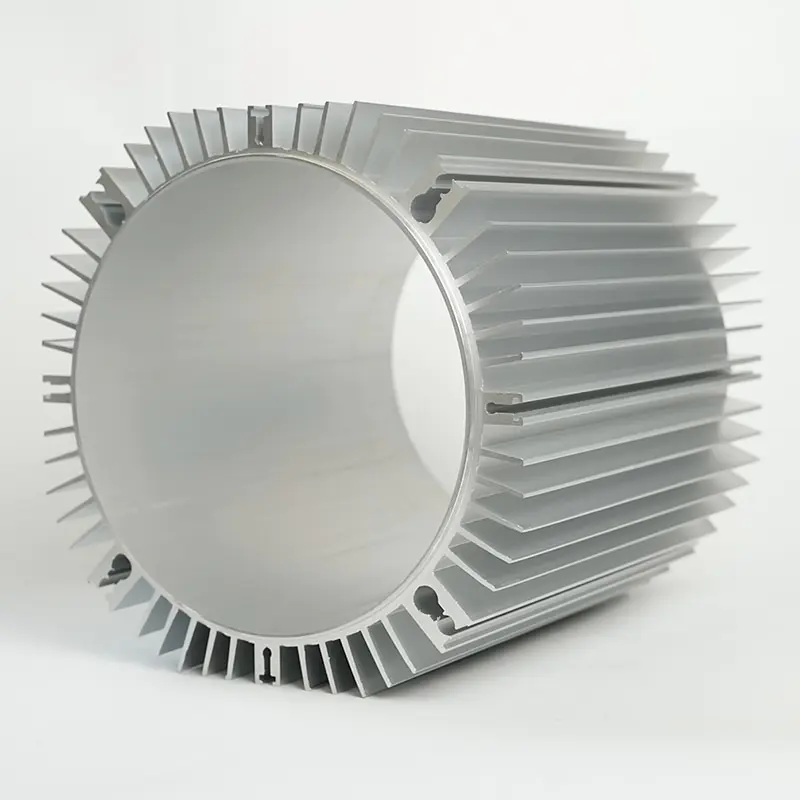
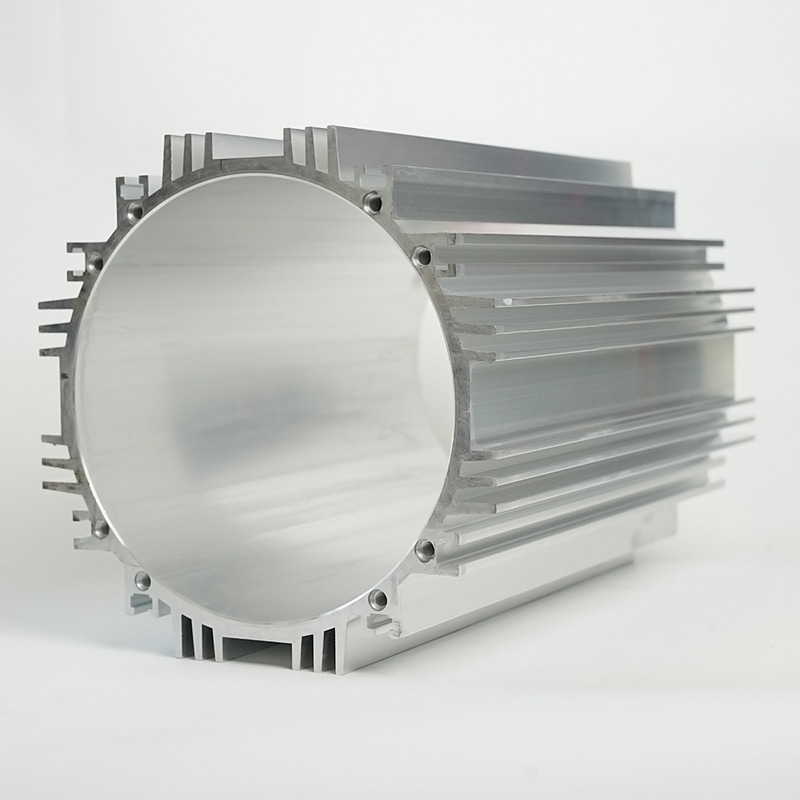
One of the most critical factors in motor longevity is heat management. An Aluminum Electric Motor Casing acts as a massive heat sink, drawing thermal energy away from the stator windings significantly faster than ferrous alternatives. Aluminum's thermal conductivity is approximately 200-230 W/(m·K), whereas cast iron typically ranges between 50-80 W/(m·K). This allows for a more compact design without risking insulation breakdown due to overheating. When evaluating aluminum vs cast iron motor housing weight, it is clear that aluminum not only reduces the load on the mounting structure but also facilitates cooler operating temperatures, thereby extending the motor's service life.
| Material Property | Aluminum Alloy (ADC12/A380) | Grey Cast Iron (HT200) |
| Thermal Conductivity | Superior (~209 W/m·K) | Moderate (~54 W/m·K) |
| Specific Gravity | ~2.7 g/cm³ (Lightweight) | ~7.2 g/cm³ (Heavy) |
| Cooling Efficiency | Rapid Heat Exchange | Slow Heat Retention |
2. Precision Manufacturing: Die-Casting and Dimensional Stability
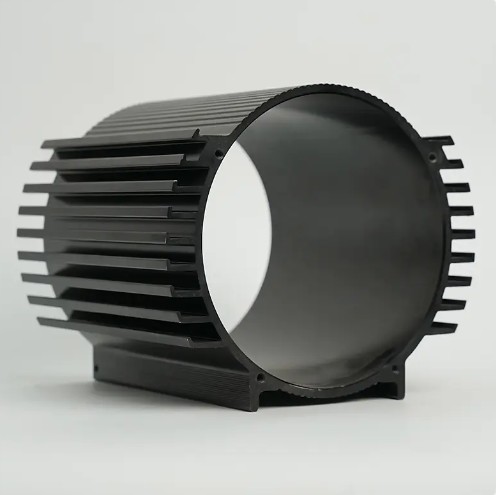
Modern industrial motors require extremely tight tolerances to ensure air gap consistency between the rotor and stator. Die-cast aluminum electric motor parts are manufactured using high-precision molds that allow for complex fin geometries and thin-wall sections that are nearly impossible to achieve with sand casting. For specialized requirements, engineers often specify an aluminum motor housing with specific inner diameter tolerances to ensure a perfect interference fit with the stator stack. This precision reduces mechanical noise and vibration, contributing to a higher overall system efficiency (IE3/IE4 standards).
Surface Treatment and Corrosion Resistance
Unlike iron, which requires heavy painting or powder coating to prevent oxidation, an Aluminum Electric Motor Casing naturally forms a protective oxide layer. In harsh chemical or outdoor environments, anodized aluminum motor housing provides an additional barrier against salt spray and moisture, ensuring that the internal electrical components remain dry and isolated from the environment. This makes it an ideal choice for the best aluminum motor housing for EV applications, where exposure to road salts and varying humidity is inevitable.
3. Weight-to-Strength Ratio and Dynamic Performance
The transition toward electric mobility and portable industrial equipment has placed a premium on mass reduction. An Aluminum Electric Motor Casing offers high structural strength while weighing approximately one-third as much as a comparable steel or iron enclosure. This reduction in "dead weight" improves the power-to-weight ratio of the entire machine. In dynamic applications, such as drone motors or high-speed automation, lightweight aluminum motor enclosures reduce inertia, allowing for faster start/stop cycles and more precise positioning. Furthermore, the durability of the aluminum electric motor casing ensures that the housing can withstand significant mechanical shocks and environmental stresses without cracking.
| Application Metric | Aluminum Casing Solution | Steel/Iron Casing Solution |
| Inertia / Mass | Low (High acceleration) | High (Slower response) |
| Corrosion Handling | Natural Oxidation / Anodizing | Prone to Rust (Requires coating) |
| Design Flexibility | High (Intricate cooling fins) | Low (Limited by casting thickness) |
4. Environmental Impact and Sustainability
In today's regulatory environment, the end-of-life cycle of industrial products is under scrutiny. Recyclable aluminum motor components contribute to a circular economy, as aluminum can be remelted and reused with only 5% of the energy required for primary production. Choosing an Aluminum Electric Motor Casing aligns with ESG (Environmental, Social, and Governance) goals, reducing the overall carbon footprint of the manufacturing process. Additionally, the improved efficiency gained from better heat dissipation directly reduces energy consumption during the motor's operational phase.
Frequently Asked Questions (FAQ)
1. What are the primary benefits of aluminum motor housing over cast iron?
The primary benefits include significantly higher thermal conductivity for better cooling, a 60% reduction in weight, and superior natural corrosion resistance, making it better suited for high-efficiency and portable applications.
2. Is the durability of the aluminum electric motor casing sufficient for heavy-duty industrial use?
Yes. When cast with high-silicon alloys like ADC12 and properly engineered with reinforcing ribs, aluminum casings provide excellent structural integrity and impact resistance, rivaling traditional materials in most industrial environments.
3. How to clean the aluminum motor housing without damaging the surface?
For standard Aluminum Electric Motor Casing, use a pH-neutral industrial cleaner and soft brushes. Avoid highly acidic or alkaline solutions, especially on anodized surfaces, as they can strip the protective oxide layer and lead to surface pitting.
4. Why is aluminum considered the best aluminum motor housings for EV applications?
EVs prioritize range and thermal management. Aluminum's lightweight nature increases vehicle range, while its heat dissipation properties allow the motor to run at higher power densities without thermal throttling.
5. Can I get custom die-cast aluminum electric motor parts for specific sizes?
Absolutely. Most specialized manufacturers provide high-precision aluminum motor housing solutions tailored to specific inner diameters and mounting requirements to ensure optimal stator alignment.
Industry References
- International Electrotechnical Commission (IEC) - Standards for Rotating Electrical Machines.
- Aluminum Association - Properties and Selection: Aluminum Alloys for Die Casting.
- Journal of Thermal Analysis and Calorimetry - Heat Dissipation Trends in Electric Motors.
- NEMA Standards Publication MG 1 - Motors and Generators.