
 English
 Español
Content
- 1 Why Aluminum Is the Dominant Material for Pump Motor Housings
- 2 Alloy Selection for Pump Motor Housings
- 3 Manufacturing Processes: Die Casting, Sand Casting, and Machining
- 4 Structural and Functional Requirements of the Housing
- 5 Surface Treatment Options for Corrosion and Wear Resistance
- 6 Sourcing Considerations for Aluminum Pump Motor Housings
Why Aluminum Is the Dominant Material for Pump Motor Housings
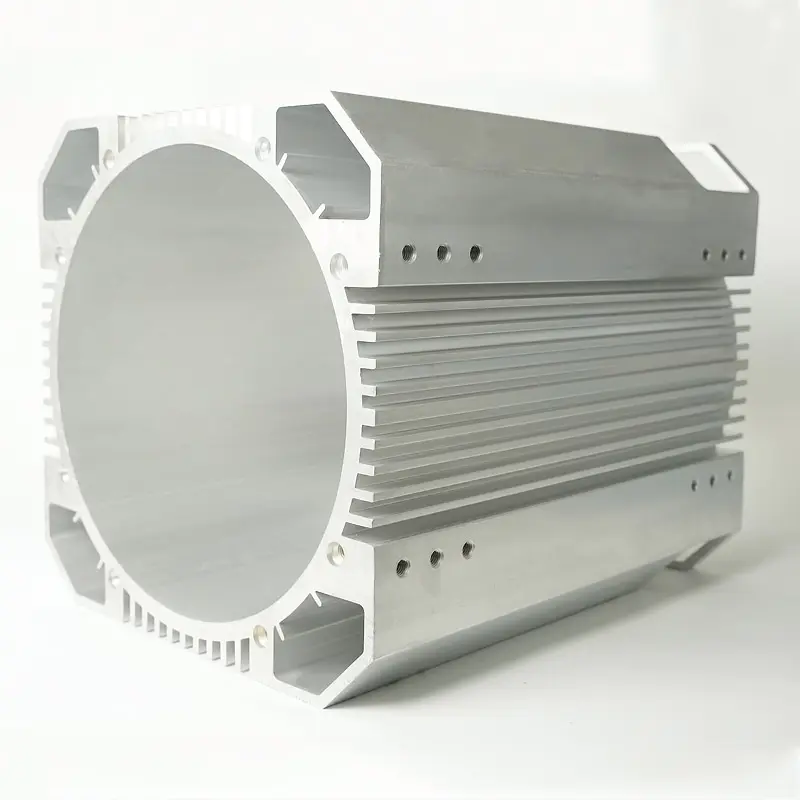
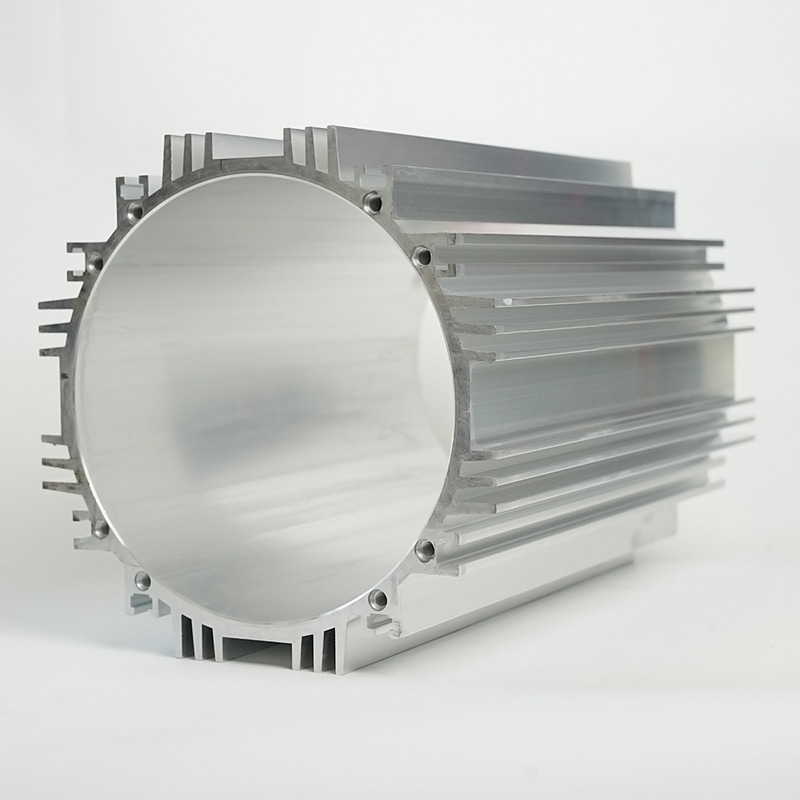
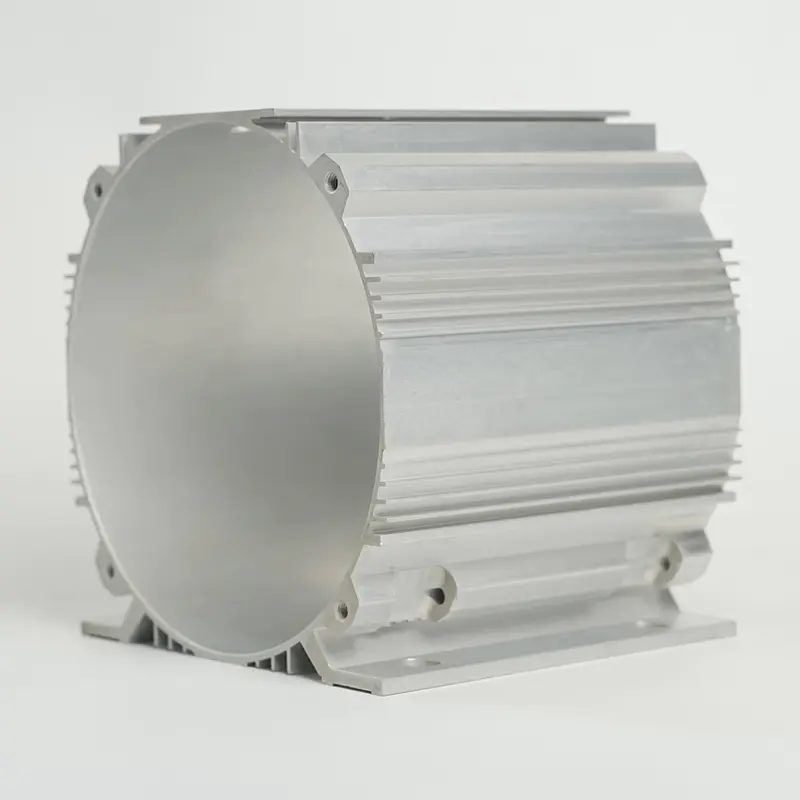
Aluminum has become the default material for pump motor housings across most industrial and commercial applications, displacing cast iron in many segments over the past few decades. The shift is driven by a combination of weight reduction, corrosion resistance, and thermal performance—three properties that matter significantly in pump and motor assemblies.
A typical aluminum pump motor housing weighs roughly one-third as much as an equivalent cast iron housing, with no meaningful loss in structural integrity for the majority of pump duty cycles. This weight advantage reduces shipping costs, simplifies installation, and lowers the load on mounting brackets and frames in mobile or elevated equipment.
Aluminum also dissipates heat efficiently. Motor windings generate heat under load, and the housing is the primary thermal pathway to ambient air. Aluminum's thermal conductivity—around 200 W/m·K for common alloys—is significantly higher than cast iron's 50 W/m·K, which translates directly into better motor cooling and longer winding life under continuous duty.
Corrosion resistance is the third pillar. Aluminum forms a natural oxide layer that protects against rust in wet or humid pump environments where iron housings would require additional coatings and maintenance.
Alloy Selection for Pump Motor Housings
Not all aluminum alloys are equally suited to pump motor housing production. The selection depends on the manufacturing process, the operating environment, and the mechanical demands of the application.
| Alloy | Process | Key Properties | Typical Use |
|---|---|---|---|
| A380 | Die casting | Good fluidity, pressure-tight, moderate strength | High-volume motor housings |
| A356 | Sand / gravity casting | Higher ductility, weldable, good fatigue resistance | Heavy-duty pump housings |
| 6061 | Extrusion / machining | High strength, excellent machinability, T6 temper | Precision-machined housings |
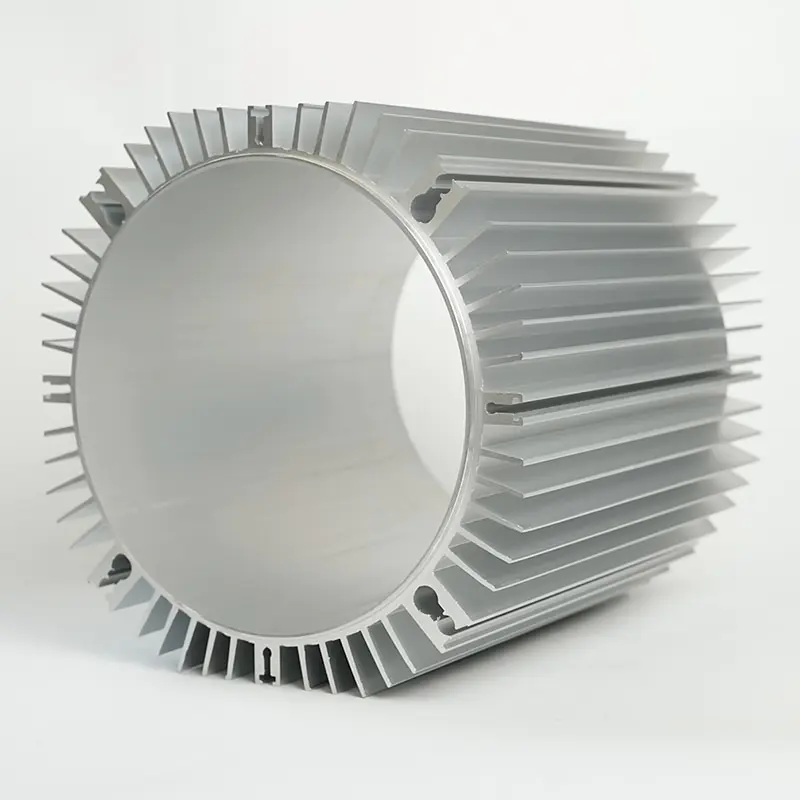
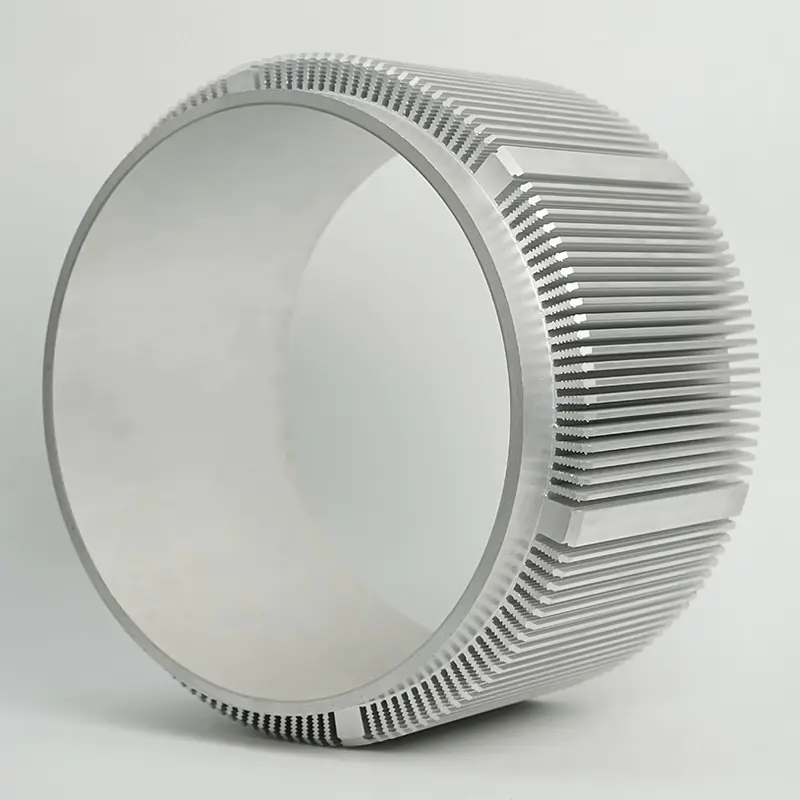
| 6063 | Extrusion | Superior surface finish, good corrosion resistance | Finned housings for thermal management |
| ADC12 | Die casting | High silicon content, good casting fluidity | Asian-manufactured pump motors |
For most standard pump motor housings produced in volume, A380 die casting is the most cost-effective route. Where higher mechanical properties or post-cast welding is needed, A356 with T6 heat treatment offers a measurable step up in tensile strength—typically 240–280 MPa versus A380's 310 MPa ultimate tensile strength (UTS), though A356-T6 achieves better elongation and impact resistance.
Manufacturing Processes: Die Casting, Sand Casting, and Machining
The manufacturing route for an aluminum pump motor housing determines its dimensional precision, surface finish, wall thickness capability, and unit economics. Three processes dominate:
High-Pressure Die Casting (HPDC)
HPDC is the standard for mid-to-high volume production. Molten aluminum is injected into a steel die at pressures ranging from 700 to 1,000 bar, producing near-net-shape parts with tight tolerances and smooth surfaces. Cycle times can be under 60 seconds for smaller housings, making HPDC highly economical at volumes above roughly 5,000 units. The tradeoff is tooling cost—a production die for a motor housing can run $20,000–$80,000 depending on complexity—and limited ability to produce undercuts or internal cavities without side cores.
Sand Casting and Gravity Die Casting
For lower volumes or larger, more complex housings, sand casting offers flexibility that HPDC cannot match. Internal channels, complex geometries, and undercuts are achievable without expensive tooling changes. Sand casting also allows the use of A356, which is preferred when the housing will undergo T6 heat treatment for improved mechanical properties. Dimensional tolerances are wider than HPDC—typically ±0.5 mm versus ±0.1–0.2 mm for die casting—so critical mating surfaces require secondary machining.
CNC Machining from Billet or Extrusion
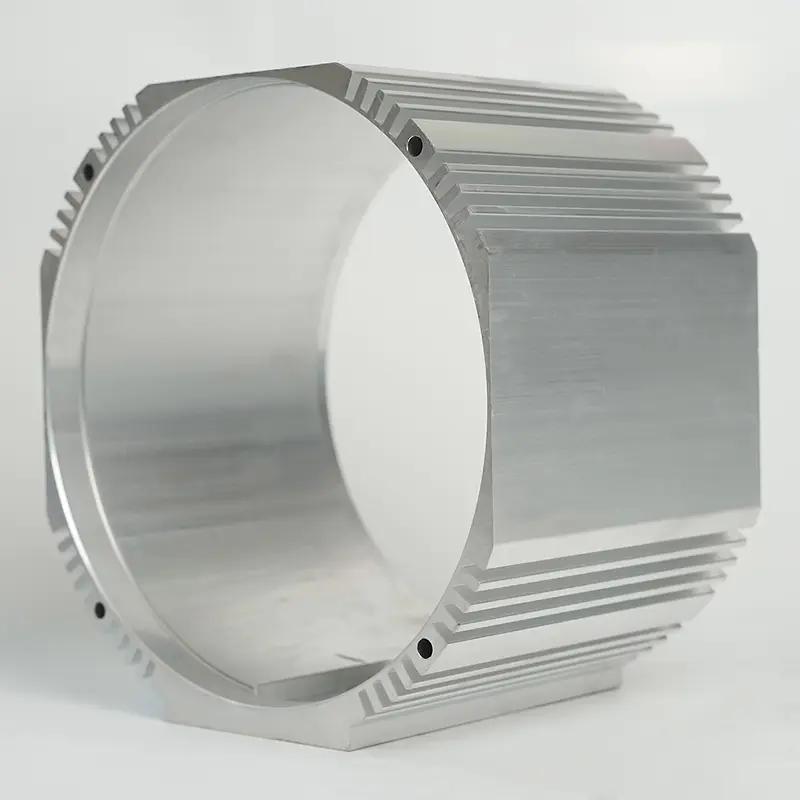
Where the highest dimensional precision is required—such as housings that must maintain concentricity tolerances of 0.02 mm or tighter for bearing seats and stator bores—CNC machining from 6061-T6 billet is the appropriate method. Unit cost is substantially higher than casting, but the process is suitable for prototypes, specialty motors, and applications where casting porosity would be a disqualifying defect (e.g., hermetic motor housings for refrigeration pumps).
Structural and Functional Requirements of the Housing
An aluminum pump motor housing is not a passive enclosure—it is a precision structural component that must fulfill several concurrent engineering functions:
- Bearing seat accuracy: The bearing bores must be machined to tight tolerances (typically H7 fit) to ensure proper bearing preload and alignment. Out-of-round bearing seats accelerate bearing wear and generate vibration.
- Stator retention: The housing must hold the stator stack securely, typically via interference fit or end-cap clamping. Any movement of the stator changes the air gap geometry between rotor and stator, degrading motor efficiency.
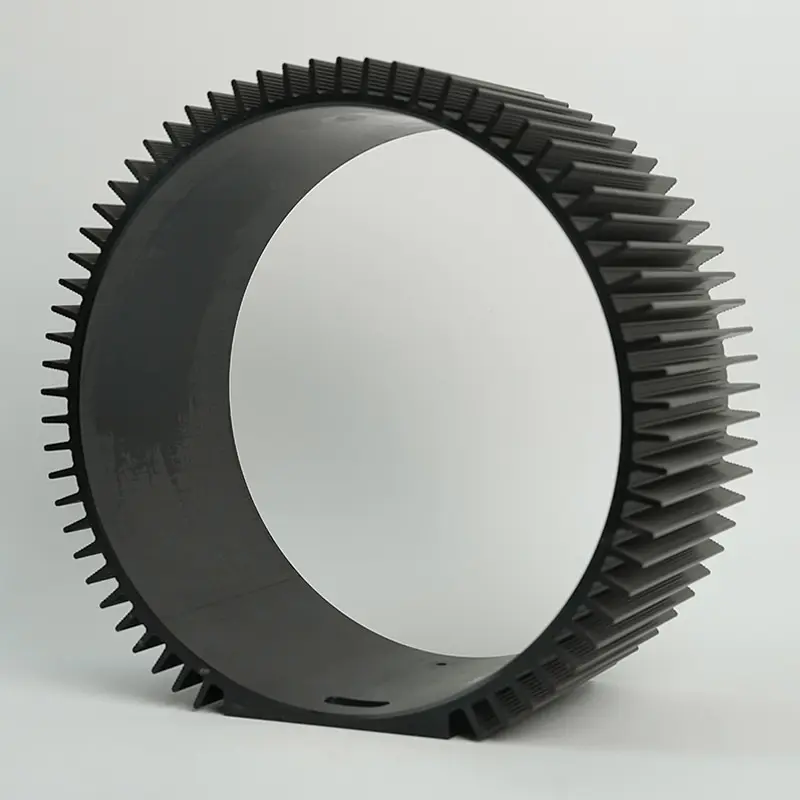
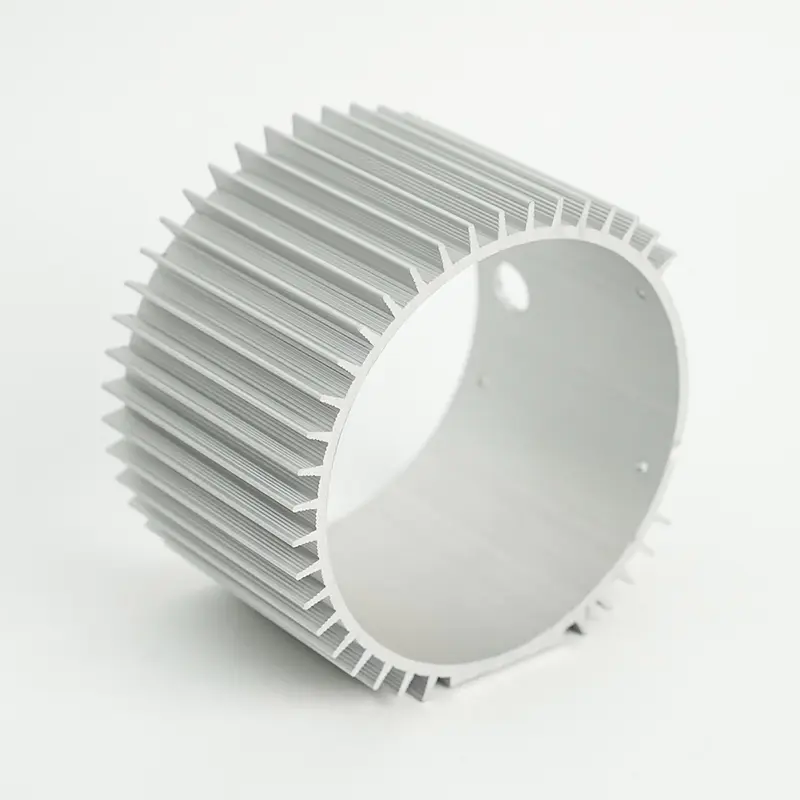
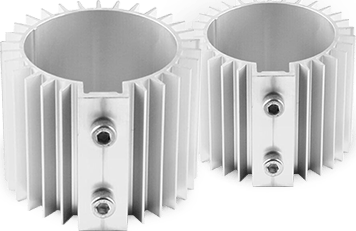
- Thermal path management: Cooling fins on the exterior surface increase heat dissipation area. Fin geometry—height, pitch, and orientation—is often optimized through FEA simulation for motors operating in continuous duty above 1 kW.
- IP sealing provisions: For pump applications, the housing must accommodate O-rings, shaft seals, and gaskets to meet IP54, IP55, or IP67 ingress protection ratings depending on the installation environment.
- Mounting interface: Foot-mounted, flange-mounted, or face-mounted configurations require precise bolt circle geometry and flatness on mating surfaces to ensure rigid, vibration-free installation.
Surface Treatment Options for Corrosion and Wear Resistance
Bare aluminum offers adequate corrosion resistance in most environments, but pump applications often involve chemical exposure, humidity, or abrasive conditions that warrant additional surface treatment:
- Anodizing (Type II): Electrochemical process that thickens the natural oxide layer to 5–25 µm. Improves corrosion resistance and allows dyeing for identification or aesthetics. Standard choice for housings in clean, wet environments.
- Hard anodizing (Type III): Produces a 25–100 µm oxide layer with hardness up to 500 HV, approaching that of mild steel. Used on bearing seats, shaft contact surfaces, and areas subject to fretting or wear.
- Powder coating: Polymer-based coating applied electrostatically and cured at ~180–200°C. Provides good impact resistance and can be applied in a wide range of colors. Common on externally visible pump assemblies.
- Chemical conversion coating (Alodine/Iridite): Thin chromate or chrome-free coating that preserves electrical conductivity while improving adhesion for subsequent paint or powder coat. Used as a base coat in aerospace and defense pump systems.
- Nickel plating: Applied to specific surfaces where aluminum's galvanic incompatibility with steel fasteners or brass fittings would otherwise cause corrosion at the interface.
Sourcing Considerations for Aluminum Pump Motor Housings
When specifying or sourcing aluminum pump motor housings, engineers and procurement teams should evaluate suppliers on several criteria beyond price:
Casting Porosity and Quality Control
Internal porosity is the primary defect risk in cast aluminum housings. Porosity weakens the structure and can create leak paths in pressure-bearing sections. Reputable suppliers use X-ray or CT scanning for critical housings and maintain documented process controls on melt temperature, injection speed, and die temperature. Requesting material certifications and first-article inspection (FAI) reports is standard practice for OEM procurement.
Dimensional Traceability
Critical dimensions—bearing seat diameter, stator bore roundness, mounting face flatness—should be documented in a dimensional inspection report (CMM report) aligned to the drawing callouts. Suppliers without in-house CMM capability are generally not suitable for motor housing production beyond the lowest-specification applications.
Alloy Certification
Material substitution (using a lower-grade alloy than specified) is an occasional risk in overseas supply chains. Requesting mill certificates and conducting spot-check XRF analysis on incoming lots is an effective countermeasure, particularly for housings used in safety-critical or high-duty-cycle pump systems.
Lead Time and Tooling Ownership
For die-cast housings, clarify tooling ownership upfront. In many OEM relationships, the buyer pays for tooling and retains ownership, which protects against supply disruption if the supplier relationship changes. Lead times for new tooling range from 4 to 10 weeks; production lead times for established parts are typically 3–6 weeks from purchase order.