
 English
 Español
The core of any industrial pump system lies in its motor, and the performance of that motor is significantly influenced by its housing. For decades, the choice of material for pump motor housings was limited by traditional manufacturing capabilities. However, as global industrial demands shift toward higher efficiency, better heat management, and lighter footprints, aluminum has emerged as a dominant material in the production of pump motor housings.
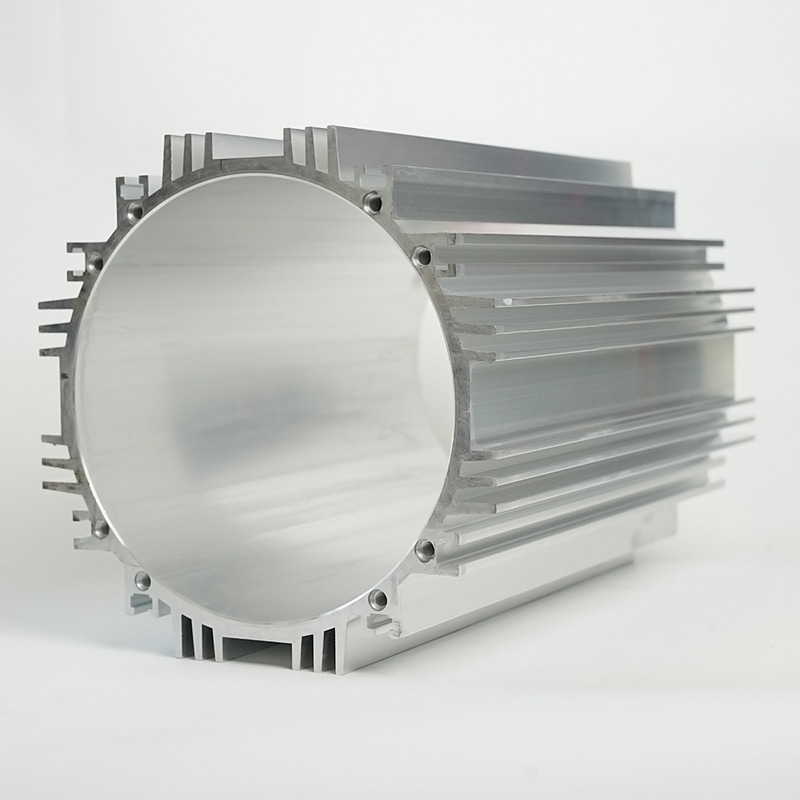
An aluminum pump motor housing serves as the protective enclosure for the stator and rotor, while also acting as a primary heat sink and structural support. In the context of water pumps, chemical pumps, and hydraulic systems, the housing must withstand internal electromagnetic stresses and external environmental challenges. This article provides an in-depth exploration of the technical characteristics that make aluminum the preferred choice for modern pump engineering, contrasting it with traditional materials and examining the nuances of different aluminum manufacturing methods.
Content
- 1 Material Properties and Thermal Dynamics
- 2 Comprehensive Comparison: Aluminum vs Cast Iron Housings
- 3 Technical Specification Table: Aluminum vs Cast Iron
- 4 Manufacturing Techniques: Die Casting vs Extrusion
- 5 Impact of Cooling Fin Design on Performance
- 6 Environmental and Sustainability Considerations
- 7 Application Specific Selection Criteria
- 8 Maintenance and Longevity of Aluminum Housings
- 9 The Future of Aluminum in the Pump Industry
- 10 FAQ
- 11 References
Material Properties and Thermal Dynamics
The most critical function of a motor housing is thermal management. Electric motors generate significant waste heat due to copper losses in the windings and friction in the bearings. If this heat is not dissipated quickly, the insulation on the windings will degrade, leading to premature motor failure.
Aluminum is an exceptional conductor of heat. Pure aluminum has a thermal conductivity of approximately 235 Watts per meter-Kelvin. Even when alloyed for structural strength, such as in the A380 or ADC12 series, the thermal conductivity remains around 96 to 120 Watts per meter-Kelvin. In contrast, traditional cast iron typically offers only 50 Watts per meter-Kelvin. This means an aluminum housing can move heat away from the motor internals up to three times faster than a cast iron equivalent.
Furthermore, the specific heat capacity of aluminum allows it to absorb and release energy efficiently. In pump applications where motors may cycle on and off frequently, the ability of the aluminum shell to stabilize operating temperatures is a major advantage for the longevity of the internal components.
Comprehensive Comparison: Aluminum vs Cast Iron Housings
When procurement managers and engineers evaluate motor housings, they often compare aluminum and cast iron. While cast iron has historical significance, aluminum offers several advantages in specific categories.
1. Weight and Power Density
Aluminum has a density of approximately 2.7 grams per cubic centimeter, which is about one third the density of cast iron. For mobile pumping units, firefighting equipment, or aerospace applications, weight reduction is paramount. A lighter motor housing allows for easier installation and lower shipping costs. More importantly, it improves the power to weight ratio of the entire pump assembly.
2. Corrosion Resistance
Pumps are frequently exposed to moisture, chemicals, or outdoor environments. Aluminum naturally forms a protective oxide layer when exposed to air, which prevents further corrosion. While cast iron is prone to rusting unless heavily painted or treated, aluminum maintains its integrity even in humid conditions. For marine or chemical processing pumps, specialized anodized aluminum housings provide even greater protection against salt spray and acidic vapors.
3. Precision and Aesthetics
The manufacturing of aluminum housings via die casting allows for much tighter tolerances than traditional sand casting used for iron. This precision ensures a better fit for bearings and seals, reducing the risk of leaks and mechanical vibration. Additionally, aluminum housings have a smoother surface finish, which is often more aesthetically pleasing for high end consumer or commercial equipment.
Technical Specification Table: Aluminum vs Cast Iron
The following table summarizes the key physical and mechanical differences between the two primary housing materials.
| Property | Aluminum Alloy (e.g. A380) | Grey Cast Iron (HT200) |
|---|---|---|
| Density (g/cm3) | 2.71 | 7.20 |
| Thermal Conductivity (W/mK) | 95 - 110 | 45 - 55 |
| Tensile Strength (MPa) | 310 | 200 |
| Corrosion Resistance | High (Self-protecting) | Low (Prone to rust) |
| Weight Comparison | Lightweight | Heavy |
| Manufacturing Process | High Pressure Die Casting | Sand Casting |
| Typical Wall Thickness | 2.5mm - 5.0mm | 6.0mm - 10.0mm |
| Vibration Damping | Moderate | High |
Manufacturing Techniques: Die Casting vs Extrusion
Not all aluminum pump motor housings are created equal. The two most common methods for producing these components are High Pressure Die Casting and Aluminum Extrusion. Each method serves different design requirements.
High Pressure Die Casting (HPDC)
This process involves forcing molten aluminum into a steel mold at high pressure. HPDC is the preferred method for complex pump motor housings that require integrated cooling fins, mounting brackets, and terminal box interfaces in a single piece. The complexity of the geometry that can be achieved in die casting reduces the need for secondary machining, which lowers the overall cost in high volume production.
Aluminum Extrusion
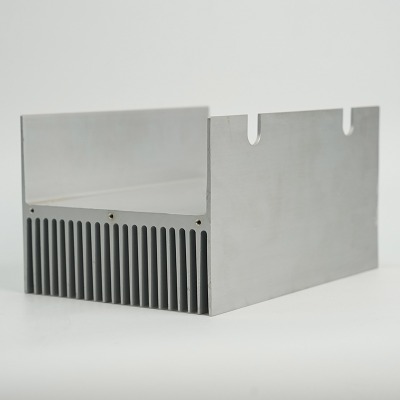
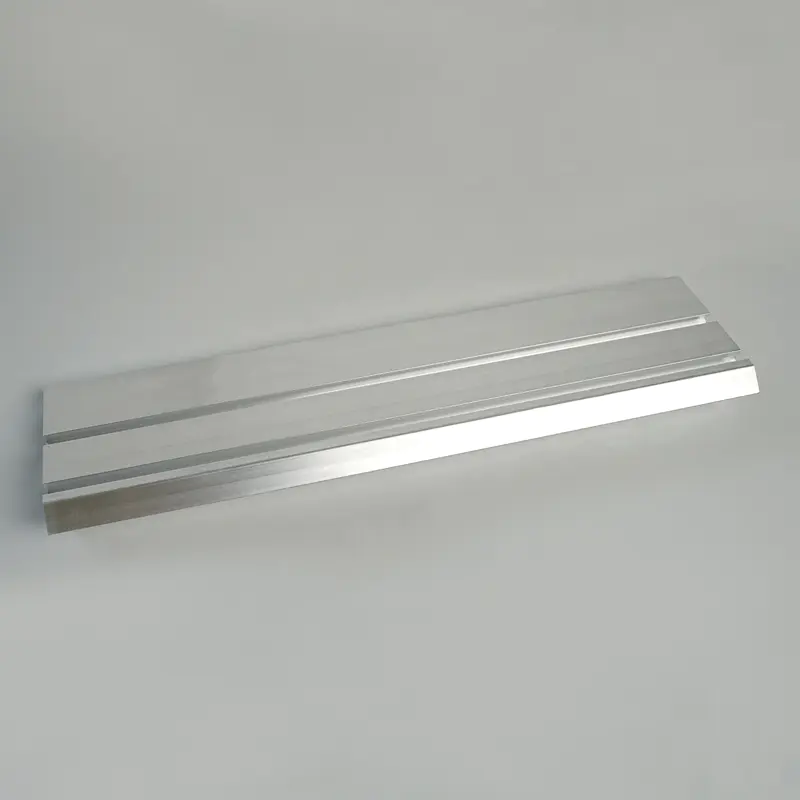
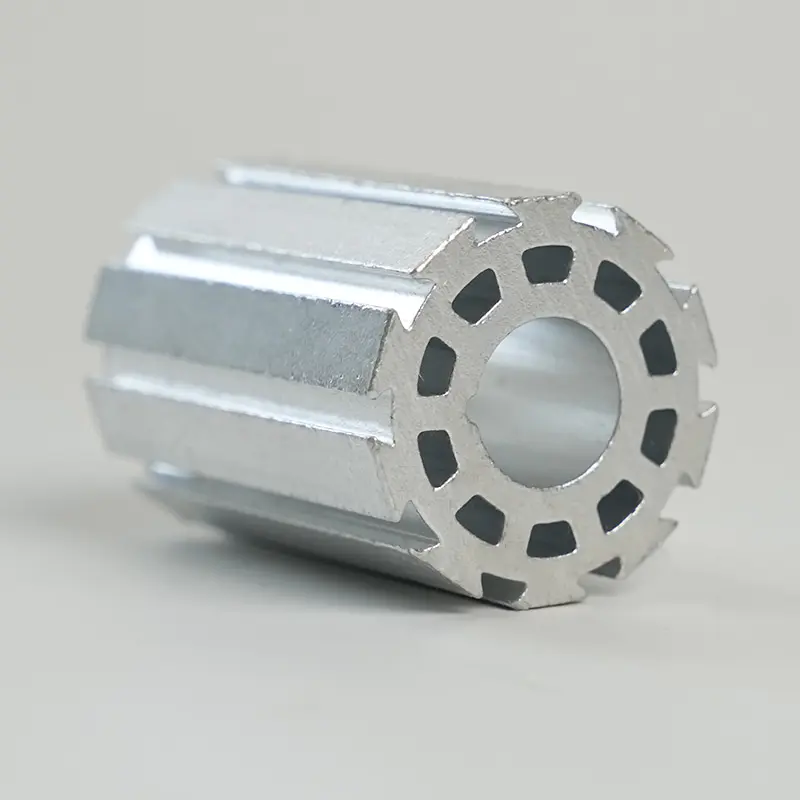
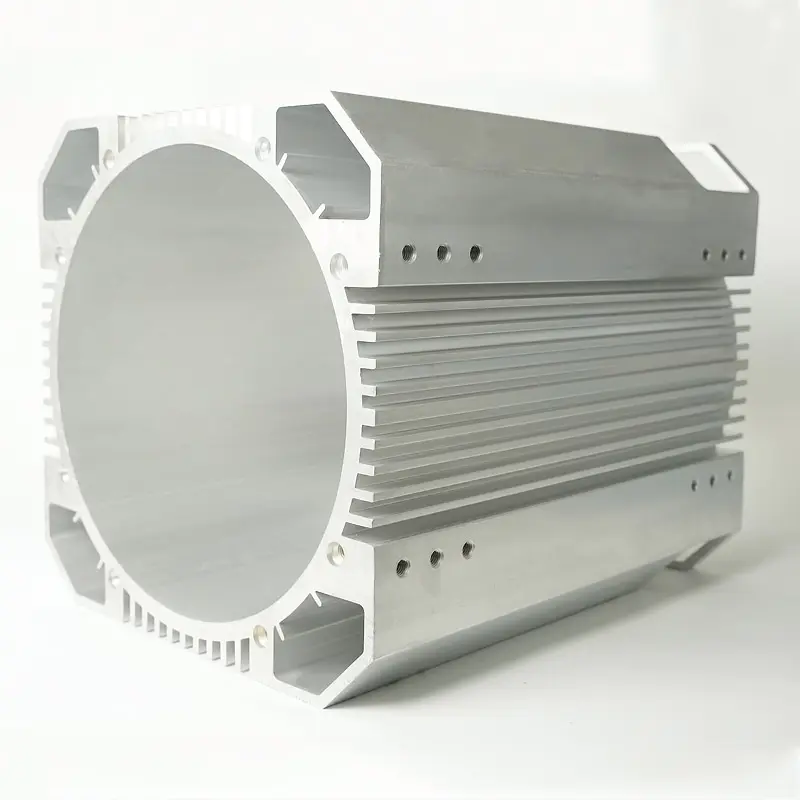
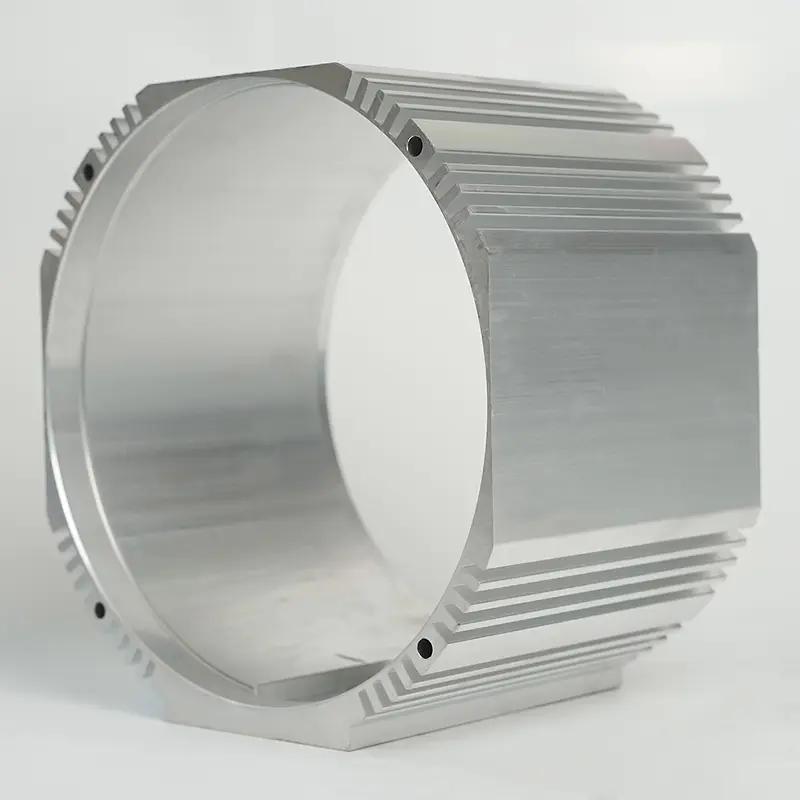
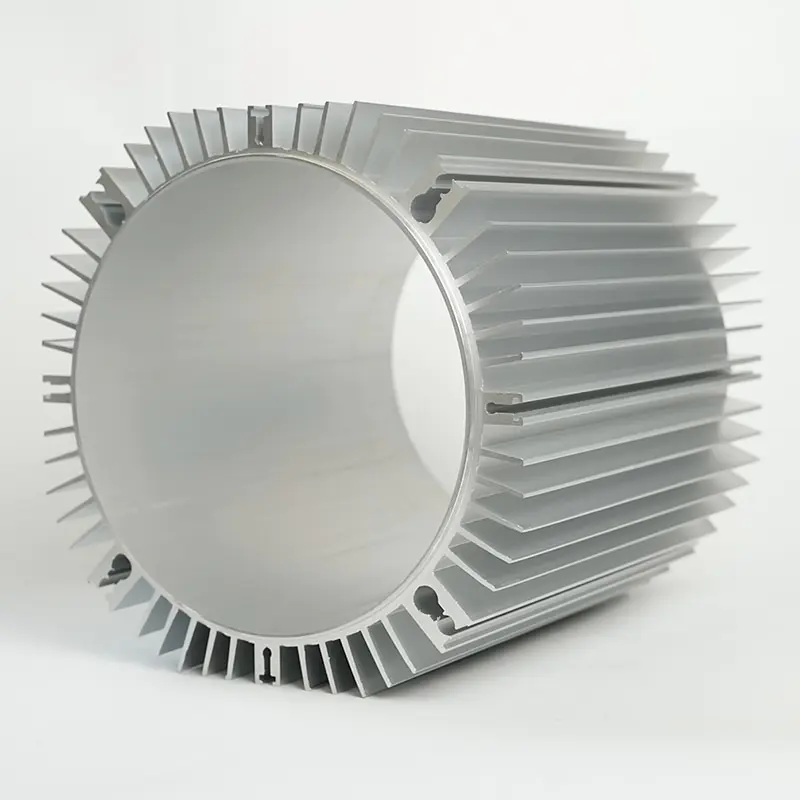
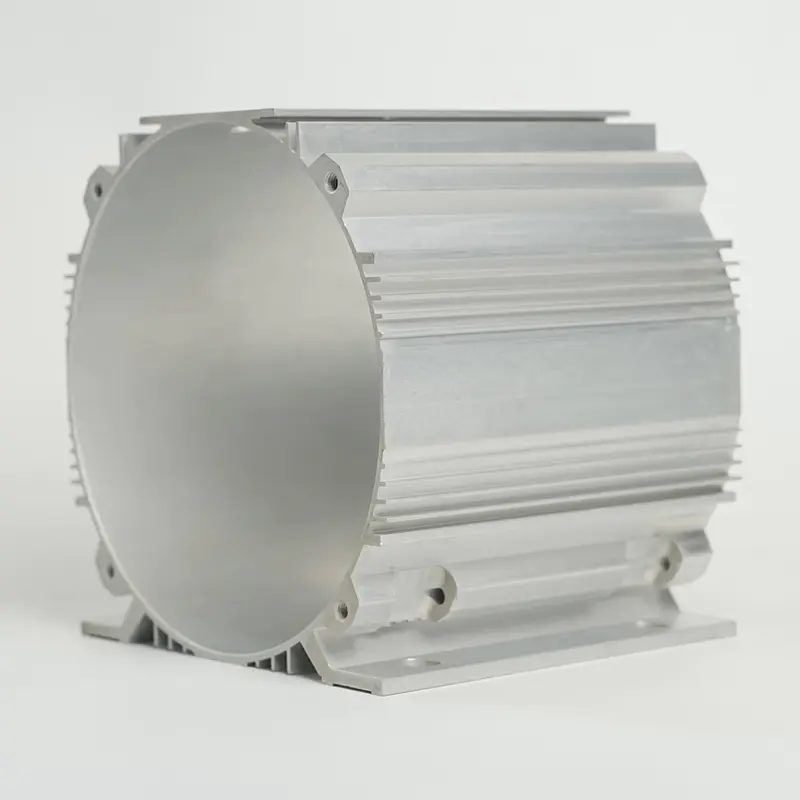
Extrusion involves pushing a heated aluminum billet through a shaped die to create long profiles with a consistent cross section. This method is often used for the main body of a motor shell. The end caps are then manufactured separately and bolted on. Extruded housings are known for their excellent structural integrity and internal density, as the process eliminates the porosity sometimes found in cast parts. However, they are limited to linear designs and cannot incorporate complex 3D features as easily as die cast parts.
Impact of Cooling Fin Design on Performance
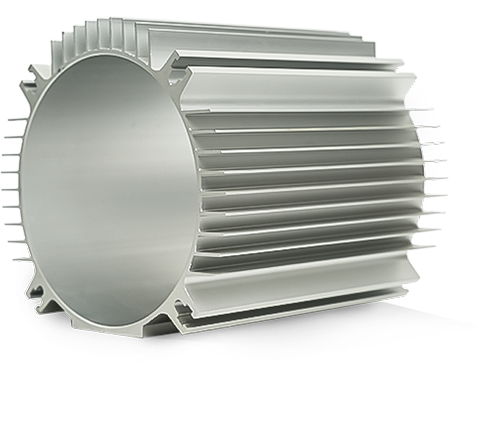
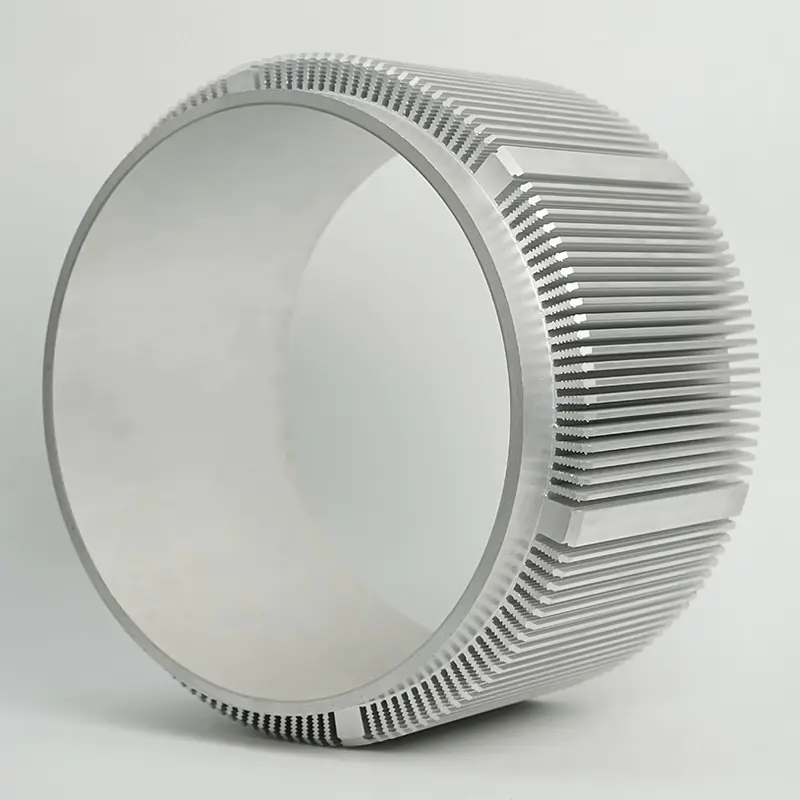
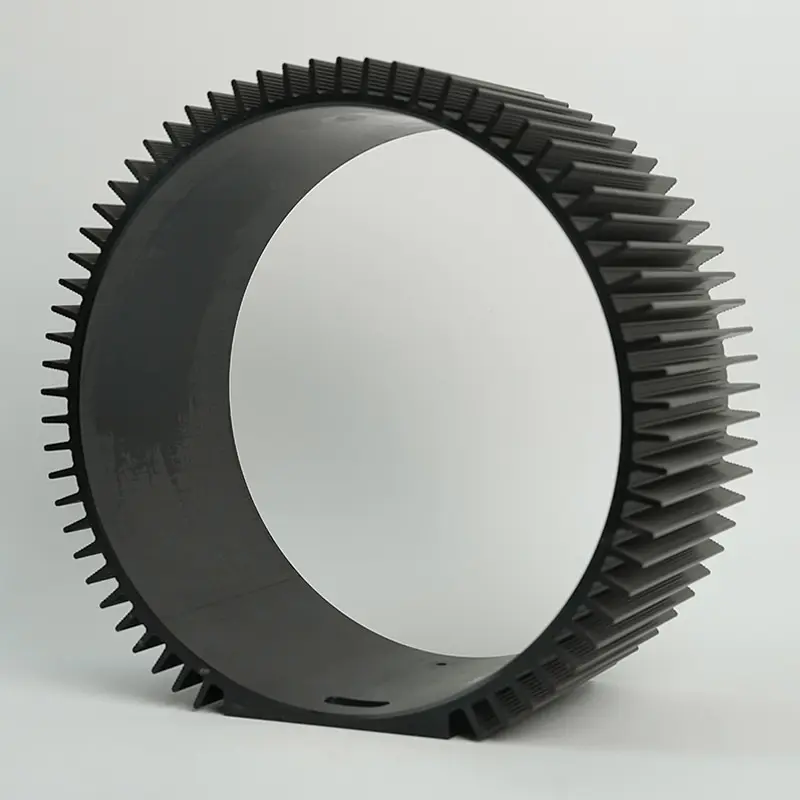
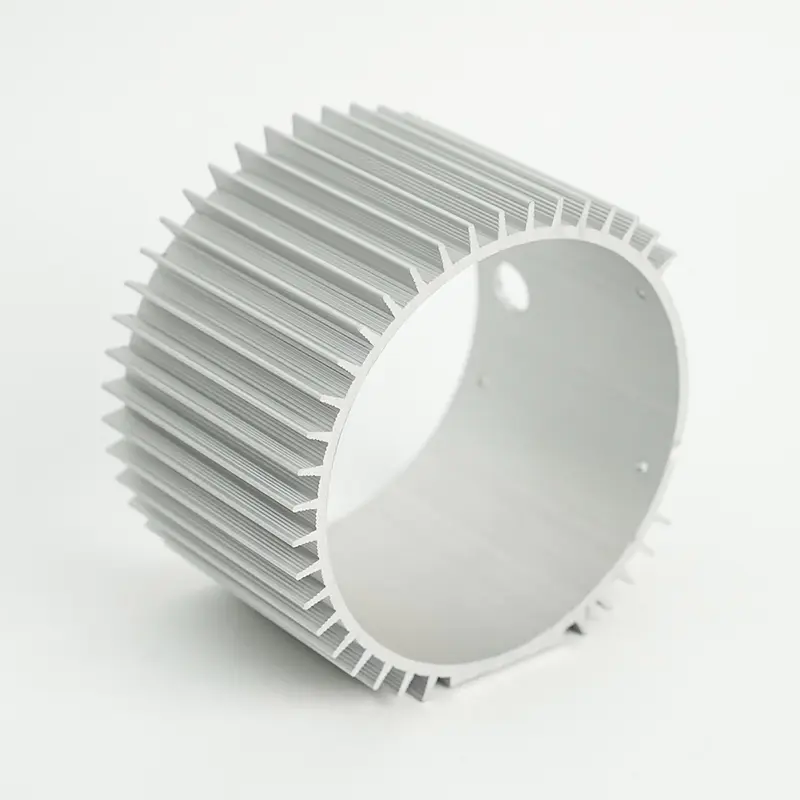
For air cooled pump motors, the external surface of the housing is covered in fins. The geometry, spacing, and height of these fins are vital for heat dissipation. Because aluminum is so easy to work with, manufacturers can design very thin and deep fins that maximize the surface area for convective cooling.
In a standard aluminum pump motor housing, the fins are usually tapered to allow the part to be removed from the die casting mold. The efficiency of these fins depends on the airflow provided by the motor fan. Engineering studies show that optimizing fin density on an aluminum shell can reduce the internal temperature of the motor by as much as 10 to 15 percent compared to a flat surface design. This temperature reduction directly correlates to a doubling of the insulation life of the motor windings.
Environmental and Sustainability Considerations
In the modern manufacturing landscape, sustainability is no longer optional. Aluminum is one of the most sustainable materials used in pump construction. It is 100 percent recyclable without losing its original properties. In fact, recycling aluminum requires only 5 percent of the energy needed to produce primary aluminum from ore.
Furthermore, the weight savings provided by aluminum housings contribute to lower energy consumption during the transport of products and lower fuel consumption for mobile machinery that utilizes these pumps. For companies looking to reduce their carbon footprint, transitioning from cast iron to aluminum components is a significant step forward.
Application Specific Selection Criteria
Choosing the right aluminum pump motor housing requires an understanding of the specific application environment.
Submersible Pumps
In submersible applications, the housing is in constant contact with the pumped fluid. The aluminum must be of a grade that resists the specific chemistry of the water or liquid. Hard anodizing or epoxy coatings are often applied to ensure the housing does not pit or corrode over time, which could lead to electrical shorts.
High Pressure Hydraulic Pumps
These pumps experience high internal pressures and mechanical vibrations. In these cases, the housing design must focus on wall thickness and the integrity of the bearing seats. Die cast aluminum alloys with higher silicon content are often used to provide the necessary hardness and wear resistance.
Food and Beverage Industry
For pumps used in food processing, the housing must be easy to clean and resistant to the aggressive detergents used in washdown procedures. Aluminum housings with smooth surfaces and minimal crevices prevent the buildup of bacteria and are compatible with various food grade coatings.
Maintenance and Longevity of Aluminum Housings
One common misconception is that aluminum housings are less durable than iron. While aluminum is softer, it is not necessarily less durable in the context of motor operations. Because aluminum does not scale or flake due to rust, the internal air gap between the rotor and stator remains clean.
The main maintenance concern for aluminum housings involves the threaded holes used for mounting or terminal box attachment. Because aluminum is a softer metal, over-tightening bolts can strip the threads. Many high quality manufacturers use steel thread inserts or design deeper thread engagement to mitigate this issue. When maintained properly, an aluminum pump motor housing can last for decades, often outliving the mechanical seals and bearings of the pump itself.
The Future of Aluminum in the Pump Industry
As we look toward the future, the integration of smart sensors into motor housings is becoming more common. Aluminum is an ideal material for this, as it can be easily machined to house vibration sensors, thermal probes, and communication modules. The ability to cast complex internal cavities also allows for the development of liquid cooled motor housings, where coolant circulates directly through the aluminum shell to handle the extreme heat of high performance industrial pumps.
The trend toward electrification and the demand for higher efficiency motors will continue to drive the adoption of aluminum. Its unique combination of thermal performance, weight efficiency, and manufacturing flexibility makes it the cornerstone of modern pump motor design.
FAQ
1. Can aluminum pump motor housings be used in saltwater environments?
Yes, but they require proper surface treatment. While standard aluminum has good corrosion resistance, saltwater can cause pitting. For marine applications, manufacturers typically use marine grade alloys or apply hard anodizing and specialized marine coatings to protect the housing.
2. Is an aluminum motor housing more prone to vibration than cast iron?
Cast iron has better natural vibration damping properties due to its mass and internal structure. However, aluminum housings are designed with structural ribs and precise bearing seats that minimize vibration at the source. For most modern high speed pump applications, the difference in vibration is negligible.
3. Why are very large industrial motors still made with cast iron?
When the motor reaches a certain size, the mechanical strength required to support the massive weight of the internal laminations and copper exceeds what standard aluminum alloys can provide economically. Cast iron is preferred for very large, stationary industrial motors where weight is not a concern but structural rigidity is paramount.
4. Does the price of aluminum make these housings significantly more expensive?
While the raw material cost of aluminum is higher than iron, the manufacturing process for aluminum die casting is much faster and requires less secondary machining. This often results in a final part cost that is competitive with, or even lower than, finished cast iron parts, especially when shipping costs are factored in.
5. How does temperature affect the strength of an aluminum housing?
Aluminum maintains its structural integrity well within the typical operating temperature range of an electric motor (up to 150 degrees Celsius). It only begins to lose significant strength at temperatures far exceeding what the internal motor components could survive.
References
- Material Science and Engineering: Properties of Die Cast Aluminum Alloys in Industrial Enclosures.
- International Journal of Thermal Sciences: Comparative Analysis of Heat Dissipation in Electric Motor Shells.
- Standards for Industrial Pump Motors: Material Requirements and Environmental Compliance.
- Sustainable Manufacturing: The Lifecycle and Recyclability of Aluminum in the B2B Sector.
- Technical Guide for Die Casting: Design Optimization for Thin Walled Motor Housings.